Introduction
At a Glance
Purchasing packaging automation for pouches and bags can be challenging. The flexibility of the product and the delicacy it demands from handling can make purchase price increase before you know it. Here are our top 7 factors that impact the total cost of packaging automation for pouches and bags:
- Clarity (or Lack Thereof) in Project Scope
- Environment, Space, and Accessibility
- Speed and Product Handling Methods
- Product Infeed and Upstream Conditioning
- SKU-Mix and Change Part Requirements
- Future-Proofing
- Manual Dexterity vs. Equipment Limitations
These factors certainly drive up cost, but they can be limited in impact by three general principles: simplicity, openness, and communication.
As original equipment manufacturers (OEMs) in secondary packaging, we’re often asked the question: “What Affects the Price of Packaging Equipment?” Between budgetary constraints, competing prices, and technically complex specs, it’s no wonder buyers question where purchase prices come from. But the answer isn’t always straightforward.
Pricing for secondary packaging equipment varies depending on individual product and operational needs. In this article, we’ll focus on one of the most common and complex product formats: pouches and bags. Covering things like scope, environment, flexibility, and handling, you’ll learn about the 7 pricing factors of packaging automation for pouches and bags.
In this article, we’ll cover:
- The seven key cost factors of packaging automation for pouches and bags
- How these factors drive cost and how to reduce their impact
- The weight of machine complexity and what to watch out for
- Three general principles to promote to avoid cost increases
1. Clarity (or Lack Thereof) in Project Scope
All good projects start with solid planning. It builds a strong foundation. So, if your project is starting with uncertainty regarding scope – in bag format, pack patterns, and future product needs – your vendor will need to price for that gap. Undecided factors broaden the scope of what the machine must be able to manage.
Cost Impact
How To Reduce Cost
2. Environment, Space, and Accessibility
Your facility is a moving, working, evolving operation – and a new machine is coming into that. Space constraints, sanitation requirements, and environmental conditions shape what kind of machine you’ll need, and in turn, what costs you’ll face.
Cost Impact
How To Reduce Cost
3. Speed and Product Handling Methods
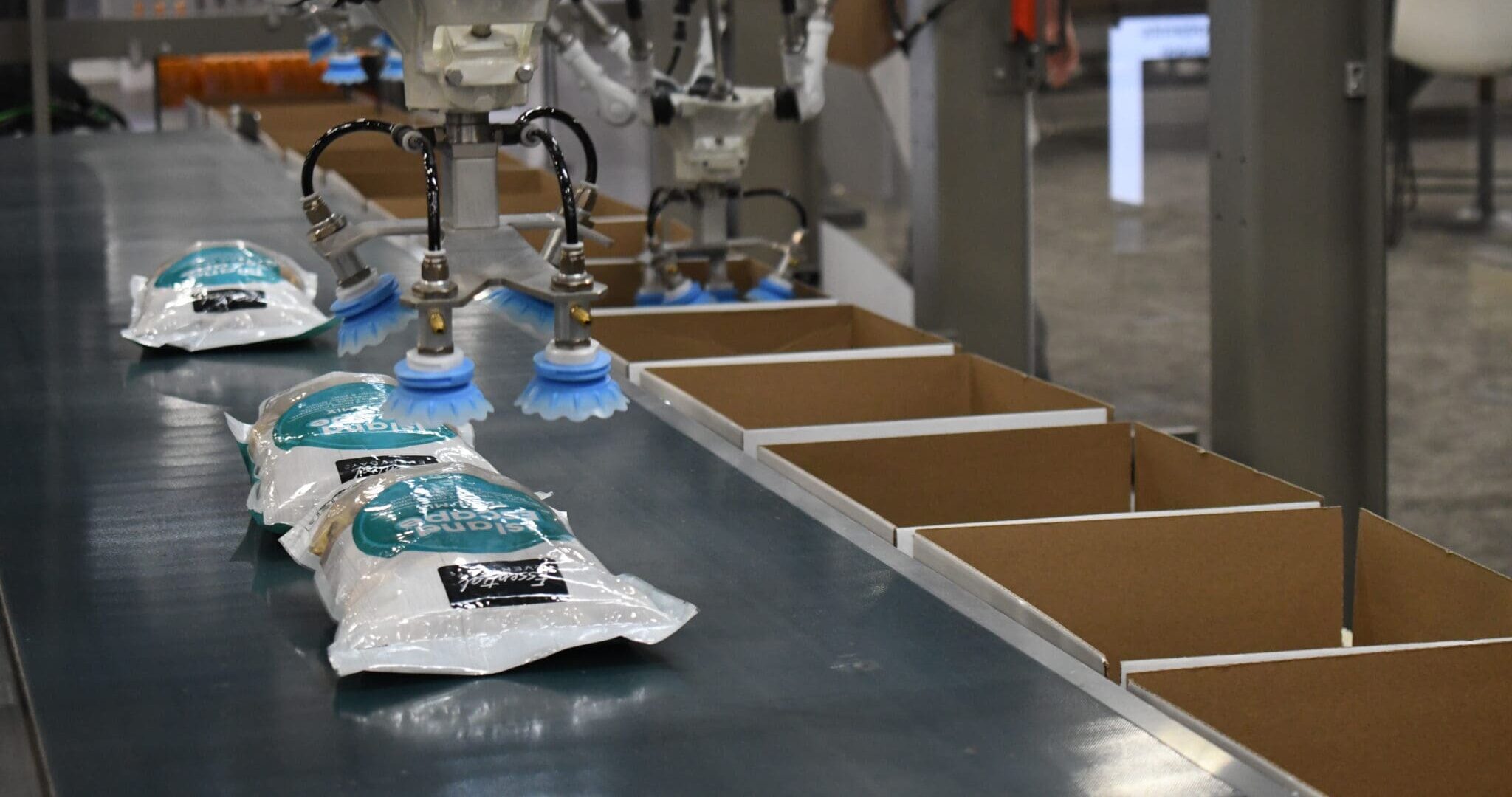
The more advanced your operation is in speed and product handling, the greater the machine you’ll need to meet expectations. Overall size, servo count, and part complexity are all factors on your machine that can be affected. And especially with delicate or flexible pouch formats, product handling should be addressed and weighed early in the decision-making process.
Cost Impact
How To Reduce Cost
4. Product Infeed and Upstream Conditioning
The quality and consistency of your upstream machinery matters just as much in packaging automation pricing, as the product itself. Variability in how bags arrive to your case packer will drive costs in time saving and engineering simplicity. Anything that your secondary packaging machine will need to address and adjust will compound costs, both upfront and down-the-line.
Cost Impact
How To Reduce Cost
Note: Some handling can effectively decondition product, despite prior efforts. This means that loose product may build up in a particular spot in the bag, causing issues fitting all the products into the case for loading. You may need to add devices like robots, lanes, conditioning, etc., depending on product type.
5. SKU Mix and Change Part Requirements
The more SKUs your line runs, the more likely you’ll be performing changeovers. And with changeovers come change parts. Mechanical or robotic components, change parts are designed to handle specific sizes, formats, or orientations.
Each SKU may require a unique set of change parts, and those sets raise cost quickly. Another hidden cost you’ll want to note is that change parts mean more change points, programmatic complexity, and time spent in changeover.
Cost Impact
How To Reduce Cost
For more information about changeovers or change parts, take a look at other articles in the Douglas Learning Center:
6. Future-Proofing
Future-proofing means designing today to meet the needs of tomorrow. It can involve larger size range capabilities, a higher speed ceiling, or more flexible pack orientations. It can be beneficial to plan for the next 3-5 years, so you avoid premature costs down the line, but it does increase upfront costs.
Cost Impact
How To Reduce Cost
7. Manual Dexterity vs. Equipment Limitations
Shifting to automation from a manual packing process, naturally introduces some limitations in adaptability. Human hands can manipulate flexible bags to fit into tight or oddly-shaped secondary packaging. Machines, though improving overall speed and throughput, are limited in their flexibility.

Bonus: Machine Complexity
A factor that consistently drives up costs in the long-term, is machine complexity. We’ve mentioned it a few times already in this article, but it’s often not the first factor considered. Machines that are difficult to operate or diagnose can create downtime, add team stress, and increase labor demands.
Watch Out For
-
Systems that rely heavily on operator experience. For example, systems where:
- “Correct” operation is hard to diagnose
- Recipe settings lack definition
- Changeover points don’t have a clear, repeatable method for setting
- Components that are hard to access, or servo drives that are buried
- Non-intuitive human-machine interfaces (HMIs) or controls
Simplicity, Openness, and Communication: The Cardinals of Automating
Secondary packaging automation for flexible packaging like pouches and bags, can range dramatically in cost. With everything from general practices like clarity in scope and risk, to handling demands and flexibility trade-offs, pricing can be an overwhelming step in purchasing a machine.
However, in every factor we’ve listed today, there have been options to reduce the impact of cost constraints – and oftentimes, these fall into limiting complexity, having openness to change, and communicating with your vendor. It’s likely that you’ll pay more for your machine upfront than you’d like, but quality machines often provide greater return and lower costs down-the-line.
Curious in Solutions for Pouches and Bags?
Schedule a discovery call. Douglas specialists can answer questions and guide you through solutions that support your products and fulfill your operational needs.