Introduction
At a Glance
Shrink wrap system cost ranges anywhere from $330k to $1M. With a range that large, it’s more helpful to understand the cost drivers and how your operation can prepare, than try to settle on an expected price.
Key shrink wrap system cost drivers include:
- Speed Requirements
- Shrink Wrap System Type
- SKU Variability and Complexity
- Operational Standards
- Optional Add-Ons
Beyond these drivers, there are hidden factors like length of shrink tunnel, cost of utilities, and film type. To understand your project’s pricing, evaluate your operation on these factors, and specify your needs early for a smooth buying process.
No matter the packaging automation project, the big question is always, “What is something like this going to run us?” Shrink wrap systems are no different.
If you’re asking that question on a personalized vendor call, you might get a pretty concise answer. However, if you’re right at the start of your buying process and looking for some budgetary estimates, you may find the question dodged more than it’s answered.
Shrink wrap system cost ranges from a few hundred thousand, to over a million dollars. So, it’s hard to get an estimate before any specifics are settled. What you can do right now is understand budgetary ranges, watch out for cost drivers, and specify your needs.
In this article, we’ll cover:
- The basic functions and different types of shrink wrap systems
- Starting budgetary ranges by type of system
- Key drivers and hidden cost factors
- Questions to ask to prepare for the buying process
What Is a Shrink Wrap System?
Shrink wrap is a polymer-based plastic film used to protect products and provide a retail-ready finish. We’ve all seen shrink wrap in the grocery store – packs of jarred products, beverages, and canned vegetables, etc. – a shrink wrap system is likewise pretty straightforward. But for the sake of this article, we’ll briefly summarize its process for a shared understanding and quick reference.

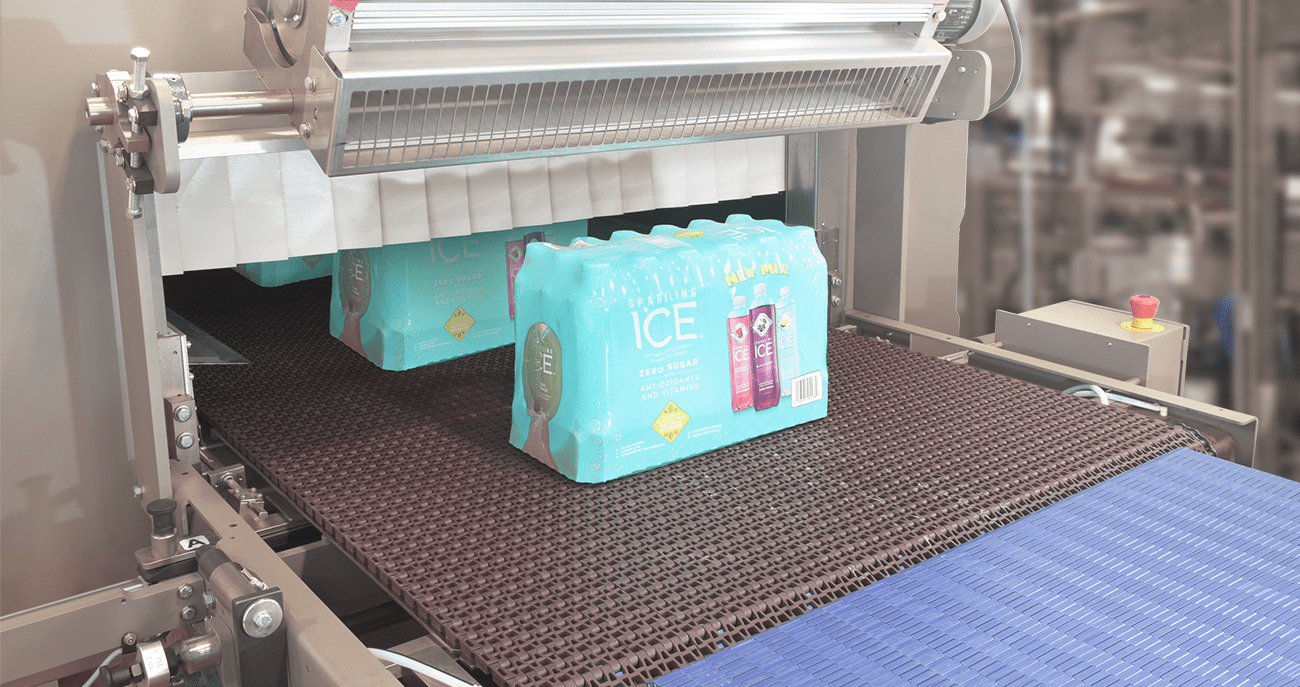
Shrink wrap “systems” are referred to as such, because there are multiple types. Some handle trays, while others focus on film only. Regardless of type, a shrink system works by wrapping shrink film around product on a conveyor, before moving it into a heated shrink tunnel. The tunnel heats the wrap, which makes the film near-molten. This causes it to shrink around the package tightly.
That’s the basic function. It varies in method and film type, but the key areas remain across the board. It’s especially important to note the shrink tunnel – a unique cost driver that isn’t a factor for most other packaging equipment.
What Is the Starting Price of a Shrink Wrap System?
Entry-level shrink wrap systems can run anywhere from $330,000 to $1M. And that’s not including add-ons or features to accommodate operational specifics. That’s just the base machine.
This broad range exists because the cost depends on what the machine is actually capable of doing. Some shrink wrap systems only do shrink, while others do tray forming and shrink wrapping. The price of the system is dependent on how complex a machine you’re intending to buy.
Shrink Wrap System Budgetary Ranges (By System Type)
System Type
What It Does
Speed (in Cycles/Minute)
Estimated Budgetary Range
Shrink Wrapping Only
What It Does
Wraps an already-trayed product with shrink film. No tray forming included.
Speeds (Cycles / Minute)
25-105
Estimated Budgetary Range
$330,000 – $580,000
Integrated Shrink Packing
What It Does
Places product into a tray. No shrink film applied.
Speeds (Cycles / Minute)
30-105
Estimated Budgetary Range
$780,000 – $1.1M
Multi-wrapping
What It Does
Combines tray packing and shrink wrapping in a single integrated line.
Speeds (Cycles / Minute)
30-105
Estimated Budgetary Range
$600,000 – $900,000
Note: All figures included in the table reflect bare-bones pricing. The prices do not reflect the addition of optional features, special configurations, etc. – only what the base machine costs. These ranges should be regarded as a floor, not a ceiling.
What Are the Key Drivers of Shrink Wrap System Cost?
A base shrink wrap system gets you a machine that produces a package. All of the features beyond that – faster speeds, improved repeatability, pack-pattern flexibility – increase the cost from the base price up. Here are the most significant cost drivers:
1. Speed Requirements
Speed is the single greatest cost driver in shrink system pricing. Mechanical differences (like system type) aren’t the only drivers of machine cost. Generally, the speedier the system, the pricier it becomes.
Speed as a Part of Shrink Tunnel Length
Speed also directly corresponds to how long your shrink tunnel needs to be. Tunnels typically range from 8 to 24 feet in length. Variables like line speed, film type (e.g. printed or clear), and film gauge also contribute to overall tunnel length.
How does tunnel length affect cost?
-
Larger machine
- More components and increased footprint
- Increased energy consumption
- Higher purchase price
BUYER’S TIP
Once your tunnel exceeds a length specified by your vendor (at Douglas it’s 16 feet), an additional heater bank is required. And that heater bank becomes another substantial cost item.
2. System Type
As we mentioned before, the type of system you’re buying directly contributes to how many (and which) components are required to build it. The general rule of thumb is that more components means a higher price.
Cost and Complexity Effects from Integrated Systems
The ability to run multiple system types on one machine is enticing. Especially for consumer packaged goods (CPG) producers, who often oversee multiple SKUs or retail channel requirements. An integrated system means fewer operators and machines to manage.
Even though it seems pretty straightforward to run film-only packs alongside tray-and-film packs, it’s surprisingly costly. On top of greater engineering efforts, film-only capability requires three additional modifications:
-
Change of Shrink Tunnel Baffles
- Prevents film from burning, since corrugate isn’t there to act as a buffer.
-
Added Overhead Stabilizing Belts
- Needed to keep product from shifting while it transfers on and off the tunnel chain.
-
Longer Shrink Tunnel
- Requires less heat, to prevent holes from burning into the bottom of the package (think low and slow).
We’re not telling you to avoid an integrated system. Just be aware that it will cause an increase in cost and complexity. If you’re interested in an integrated system, specify that with your vendor early.
3. SKU Variability and Complexity
If your line runs a wide SKU-mix, you may see a corresponding price increase. Every fully-tested size can add $15,000 to $25,000 to the machine price. On top of that, additional sizes will likely require matching change-part sets – running around $5,000.
These price increases commonly occur when the production schedule isn’t fully specified at the purchase order. Buyers follow their instincts to test everything “just in case.”
The truth is that after a year of running the machine in-house, most skilled operators can add a new size themselves, without many new parts. Be careful when “future-proofing” at purchase order – something meant to be helpful can become wasted capital quickly.
4. Standards-Driven Specifications
Every facility has its own set of standards – safety measures, cleaning requirements, etc. – but sometimes these standards add system cost without proportional value.
An example we often see is in electrical. Facilities may have standards requiring split voltage cabinets, door interlocks, or trap key systems. Depending on the operation, these additions can take machine coverage from safe and within regulations, to helicopter parent.
Of course, these additions exist because sometimes they are genuinely needed for high-risk environments. But oftentimes, these customizations are added to a machine that is already well-within the facility’s actual safety needs.
Our advice is to have an explicit conversation about standards with your team, rather than blindly inheriting the specs from the last purchase.
5. Optional Add-Ons
Beyond what’s required, vendors offer add-ons for additional cost. Several of these options deal with automating manual functions, especially for changeovers.
Automated changeover options don’t just reduce changeover time, they create more consistent and repeatable changeovers. For plants managing high turnover rates or frequent recipe changes, these options can deliver some of the strongest long-term returns from anything on the quote.
Some key options include:
-
Automated Infeed Rails – Automatically repositions infeed rails to the right location for each recipe.
- Cost: Up to $80,000+
-
Film Roll Auto Positioner & Automatic Splicer – Ensures the film is correctly seated on the spindle and allows roll changes without stops.
- Cost: ~$40,000
-
Servo Position Adjustments – Replaces manual crank-and-check adjustments at up to 6 positions (typically 4–5), with digital readings.
- Cost: ~$8,500 per adjustment point
-
Mechanical Position Indicators – Removes traditional arrow-and-scale references and replaces them with a mechanical position indicator. This makes it easier for an operator to land the right position during setup.
- Cost: $15,000 – $20,000
Your film choice has direct impact on the engineering and pricing of your shrink wrap system. Printed films require more heat time than clear, and thicker films need longer exposure. These decisions affect the length of your shrink tunnel, which in turn affects the complexity of your system.
The environment of facilities that handle wet, acidic, or corrosive products (e.g. beverages, pickles, sauces) tend to see accelerated wear on standard machine components. Manufacturers have developed different ways of slowing wear. Stainless steel frames are common solutions, but broader corrosion-resistant packages are often available.
Shrink tunnels can be made for either gas or electric heating. Follow the steps, and you get a pretty straightforward decision:
- Compare local electricity and natural gas rates
- Factor in the projected runtime of your machine
- Model the payback period off of gas’s upfront premium
Gas systems are generally more expensive upfront than electric. But where gas is cheaper than electricity, long-term savings can be found, despite the added capital cost.
One of the most common purchasing faults is buying for future SKUs that are never produced. Multi-stream capabilities, carton configurations, and additional pack-patterns can all be built in at purchase. The challenge lies in deciding what is wise to purchase upfront vs. what is better saved for retrofitting premiums.
How to Be a Prepared Buyer? Specify Needs Early
Regardless of system, specs, or add-ons, the most expensive mistake you can make is poorly specified needs. The result is a machine that becomes the bottleneck, a retrofit 6 months post-install, or a quote that compounds.
Aligning your needs with stakeholders is essential for a successful purchase. To do so, consider these guiding questions:
The clearer you specify and answer these questions early, the fewer surprises you’ll find later. And you’ll be more prepared to answer questions that come during the buying process.
Finding the System That Fits? Let Your Operation Be Your Guide
If you’ve learned anything from reading this article, perhaps it’s that shrink wrap systems are complex and difficult to budget for. This is true of course, but not the highest note to end on. So, rather than finishing there, we’ll leave you with some advice:
Let your operation – and the needs that define it – be your guide as you plan, shop, and purchase your next shrink wrap system. The “right” shrink system is one that fits your line as it is now, as it will be 3-5 years from now, and which is supported by a vendor you trust.
Looking for a Shrink Wrap System and Vendor You Can Trust?
Schedule a discovery call with Douglas. Our specialists are happy to guide you through your shrink system search, answer any questions, and deliver support that you can depend on.