Introduction
At a Glance
Variety pack systems aren’t easy to budget for. Highly custom, they can be built to virtually whatever product, format, and capability you’re looking for. The best way we’ve found to work through pricing is by each step:
- Unloading – How the product will arrive at the variety pack line, and how it will be unloaded on to the line.
Cost: $0 – $5 million - Collation – How the product will be sorted, conveyed, and grouped for packaging
Cost: $0 – $1.5 million - Packing – Repacking product in its new format; can be in any standard packaging format (e.g. carton, shrink, tray, etc.)
Cost: $150,000 – $3 million (upper-end reflects multiple pieces of eqipment integrated together)
The key takeaway is that variety pack systems can be built to suit virtually any speed and cost you need – you just have to be flexible and collaborate with your vendor.
Variety packs offer customers appealing varieties, enticing bulk packs, and a relatively low-cost way to try multiple flavors of their favorite food or beverage. It’s a smart way to grow your offerings and make your customers happy.
But the holdup is budgeting for a variety pack system. First of all, there’s not a lot out there to provide you with budgeting information; second of all, variety pack systems are a beast of their own – it’s hard to understand them through standard packaging experience alone.
So, why are variety pack systems hard to budget for, how do they work, and how much do they cost? Follow along, and we’ll break it all down.
In this article, we’ll cover:
- How variety pack systems work and affect budgeting
- How to budget step-by-step through a variety pack system
- Variety pack factors to decide on before speaking with vendors
- What your next steps should be, and how to get a solid price estimate
Note: In this article, we will explain variety pack systems as they relate to beverages. Variety packing other products may alter each step slightly, but as a whole, the core is the same.
Why Are Variety Pack Systems Hard to Budget For?
Maybe you’ve been frustrated with variety pack budgeting for a while now, or maybe the introduction to this article was your first exposure. Regardless, we’ll get us all on the same page: variety pack systems are hard to budget for.
Why? There are two central reasons:
Variety Pack Systems Have a Wide Scope
Virtually any product can be variety packed, and those products can be packed in virtually any format. Talk about a wide scope.
Budgeting for a variety pack system is done through pricing each step of the process. Its cost entirely depends on what you’re packing, in what format, and how you want to do it
Variety Pack Systems Can Be Custom and Complex
Variety pack systems are complex systems, with multiple functions, and each can be altered to fit your needs.
It’s one form of automation that is almost always custom, almost always built on an application-to-application basis. That’s why there’s no single set of “base prices” to build a budget off of.
How Do Variety Pack Systems Work? What Are the Steps?
We’ve talked about how variety pack systems are comprised of multiple steps – and it’s important to understand each step as it carries its own cost.
Variety pack systems are generally comprised of three key steps:
-
1
Product Delivery and Unloading
Product needs to get from the filler to your variety pack line. In a standard packaging line, it simply conveys straight to your packer. With variety packing, the process is somewhat up to your discretion
- Most operations take the product from a single filler and pack it into work-in-progress (WIP) pallets. From there, the pallets are warehoused and eventually moved to the variety pack line. The process of unpacking the WIP pallets is generally referred to as “depalletizing.”
- Alternatively, you could redirect some of your product from the filler line to your variety pack line (if, of course, your lines are in the same facility).
The point is: you should know your expectations for product delivery and unloading. And make sure to speak with your vendor to evaluate whether it’s doable for your line.
-
2
Product Collation
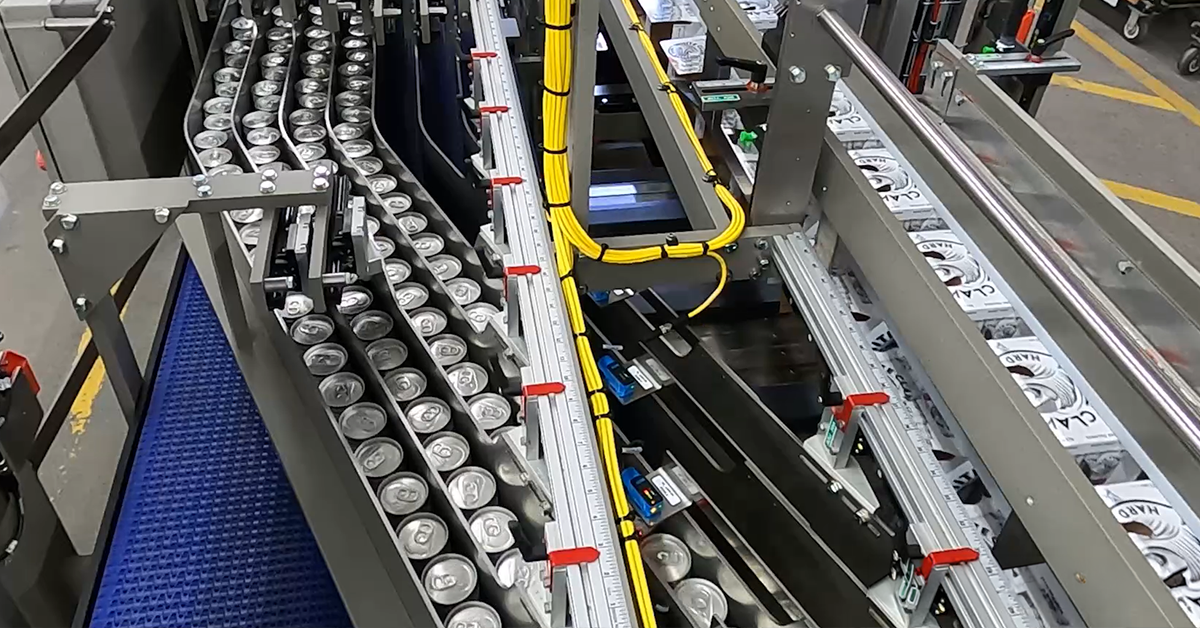
After product is unloaded, it moves into collation. Separate lanes divide each flavor variety, conveying them toward the packing machine.
Then product is counted and grouped. If a 12-count beverage SKU was running, with three flavors, four cans of each flavor would need to be counted out and grouped together for packing. That step is also a part of a collation.
-
3
Product Repacking
Once grouped with each variety pack flavor, products are ready to be repackaged. This step is really the most similar to any standard secondary packaging line. The pre-grouped variety bundles are packed in whichever chosen format (e.g. carton, tray, shrink, etc.).
How Does a Variety Pack System Fit with My Other Lines?
Variety pack systems typically use the same primary packaging line as your single-SKU packs. But the choice of where the variety pack system goes after the filler is up to you. There are two general choices for placement:
- Add to Existing Facility – Route flavors directly from your standard filler output to your variety pack line (either automatically or with manual labor) in your current facility
- Separate Warehouse – Single-SKU packs are delivered from your current facility, unloaded in a separate variety pack warehouse, and repacked in their variety bundles.
Most operations opt for the second choice – building a separate warehouse. That choice tends to increase costs for a variety of reasons (e.g. utilities, transportation), but it eliminates the issue of floorspace. Variety pack systems tend to be very large and include quite a bit of conveyance.
How Much Does a Variety Pack System Cost? A Step-by-Step Breakdown
Since variety pack systems are so highly customized, they’re usually priced by step. So rather than our typical budget tiers (as in our other articles), we’ve broken up price by step as well.
Note: For these budgets, we feature costs at “$0” for some of the baseline points. These figures reflect the costs of capital equipment purchases only. A completely manual line has no equipment purchases, so the cost figure reflects that with “$0.”
How Much Does Unloading Cost in a Variety Pack System?
Since your product can arrive to the variety pack line in so many different formats, this step has the greatest cost range. It moves from completely manual unloading to entirely automatic depalletization with robotics.
Range
Overview of Features
Cost
Baseline
Autopopulated Value (Mobile Only)
Fully manual unloading or mostly manual unloading with some roller conveyance to assist
Autopopulated Value (Mobile Only)
$0 – $200k
Mid-Range
Autopopulated Value (Mobile Only)
The ‘in-between solutions;’ simple or semi-automated depalletization (e.g. manual stretch wrap removal with automatic product unloading), or more advanced conveyance
Autopopulated Value (Mobile Only)
$200k – $1.5M
High-Range
Autopopulated Value (Mobile Only)
Fully automatic depalletization; all steps from stretch wrap removal to product unloading and conveyance are done automatically, often through robotics; price ranges based on product arrival format and vendor
Autopopulated Value (Mobile Only)
$3M – $5M +
How Much Does a Packaging Machine for a Variety Pack System Cost?
The most widely understood aspect of a variety pack system is the actual packaging. It’s pretty similar to a standard secondary packaging line, and you can price them out roughly the same. It just depends on what format you’re intending to pack in.
Cartoning
Flavor bundles are packed in paperboard cartons (e.g. 12-count cans)
- Cost: $150k – $1.2M
Shrink Wrapping
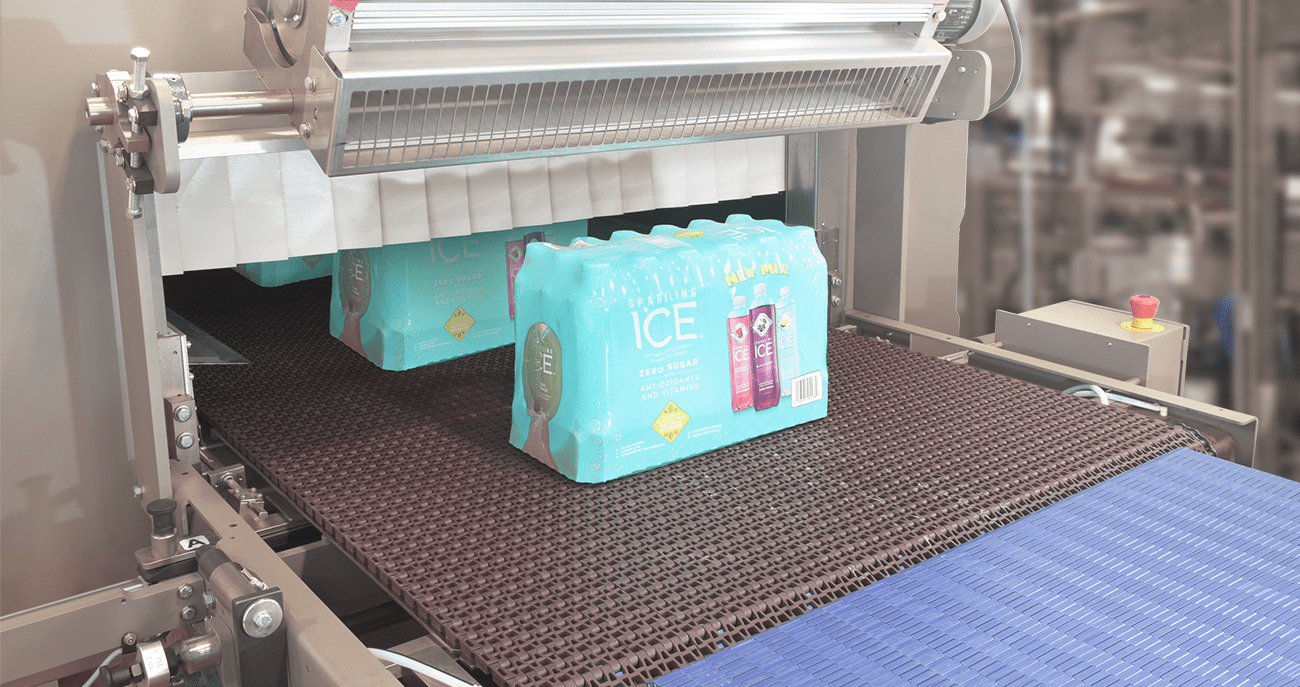
Flavor bundles are wrapped in shrink film, which is heat shrunk to form; can be with or without trays
- Cost: $500k – $850k
Tray Packing
Flavor bundles are packed in a corrugate tray, usually for display purposes
- New Trays – Flavor bundles are packed in new trays
Cost: $250k – $700k - Existing Trays – Flavor bundles are repacked in existing trays; trays from unloading are routed to the tray packer
Cost: $150k – $600k
Some operations choose to integrate multiple packaging machines into their variety pack line. This would be done in situations where product is put in a carton and then a tray (for containment) before palletizing – though this is just one example. These larger systems can potentially cost up to $3 million.
If you decide to pack in new materials (e.g. new trays, cartons, shrink, etc.), but your products initially arrived in cartons, trays, or on pallets, then you also have to decide what to do with that waste. This can add costs to your packaging step as well.
Looking for Most Cost Specifics and Budgeting Tips for Packaging Systems?
Use our other cost articles to get a better estimate for your variety pack system:
Variety Pack System Budgetary Chart
Function
Automation Tier
Capabilities
Price Range
Unloading
Autopopulated Label (Mobile Only)
Baseline
Autopopulated Label (Mobile Only)
Fully manual unloading, with some roller conveyance
Autopopulated Label (Mobile Only)
$0 – 200k
Autopopulated Label (Mobile Only)
□
Unloading
Autopopulated Label (Mobile Only)
Mid-Range
Autopopulated Label (Mobile Only)
Simple or semi-automated depalletization, and more advanced conveyance
Autopopulated Label (Mobile Only)
$200k – $1.5M
Autopopulated Label (Mobile Only)
□
Unloading
Autopopulated Label (Mobile Only)
High-Range
Autopopulated Label (Mobile Only)
Fully automated depalletization, all steps from stretch wrap removal to carton unloading are automatic
Autopopulated Label (Mobile Only)
$3M – $5M
Autopopulated Label (Mobile Only)
□
Collating
Autopopulated Label (Mobile Only)
Baseline
Autopopulated Label (Mobile Only)
Fully manual collation, with some roller conveyance or lane dividing
Autopopulated Label (Mobile Only)
$0 – $150k
Autopopulated Label (Mobile Only)
□
Collating
Autopopulated Label (Mobile Only)
Mid-Range
Autopopulated Label (Mobile Only)
Semi-automated collation, lane dividing and conveyance, some grouping efforts
Autopopulated Label (Mobile Only)
$200k – $500k
Autopopulated Label (Mobile Only)
□
Collating
Autopopulated Label (Mobile Only)
High-Range
Autopopulated Label (Mobile Only)
Fully automated collation, lane dividing, conveyance, counting and grouping
Autopopulated Label (Mobile Only)
$500k – $1.5M
Autopopulated Label (Mobile Only)
□
Repacking
Autopopulated Label (Mobile Only)
Cartoning
Autopopulated Label (Mobile Only)
Pack in paperboard cartons
Autopopulated Label (Mobile Only)
$150k – $1.2M
Autopopulated Label (Mobile Only)
□
Repacking
Autopopulated Label (Mobile Only)
Shrink Wrapping
Autopopulated Label (Mobile Only)
Pack in shrink film, with or without trays
Autopopulated Label (Mobile Only)
$500k – $850k
Autopopulated Label (Mobile Only)
□
Repacking
Autopopulated Label (Mobile Only)
Tray Packing (New)
Autopopulated Label (Mobile Only)
Pack in new corrugate trays
Autopopulated Label (Mobile Only)
$250k – $700k
Autopopulated Label (Mobile Only)
□
Repacking
Autopopulated Label (Mobile Only)
Tray Packing (Existing)
Autopopulated Label (Mobile Only)
Repack in existing corrugate trays
Autopopulated Label (Mobile Only)
$150k – $600k
Autopopulated Label (Mobile Only)
□
Total Budget:
What Are My Next Steps? How Can I Get a Real Estimate?
To get a realistic budget estimate for a variety pack system, you will likely need to collaborate with a vendor. With so many customizable factors, it’s nearly impossible to provide a workable price estimate without a professional looking at your line specifics.
So, if you’re serious about a variety pack line, your best bet is to decide what you want from your line and then communicate that with vendors. We’ve put together a list of questions for you to evaluate your expectations and priorities for your variety pack line:
-
Three key questions:
- What’s going in?
- What’s going out?
- How do you want to get there?
- What price is “too high”? What’s the price that you wouldn’t pay?
- How fast do you want it to go?
- Is the system going into your facility or a separate warehouse
- How many SKUs do you want to run?
- Are you willing to use manual labor?
- What is the most difficult step for you to do manually?
- In what format will your product be arriving?
- Are you interested in an automated depalletizing system? If so, what elements do you wnat to unload with the depalletizer?
- Do you have personnel capabilities to realistically maintain a robotic system?
- How do you plan to handle cans or bottles? Are they going to be loose as they move through the line?
- Are you planning to group variety bundles manually?
- Are you interested in an automated collation system? If so, what steps would you like done automatically (e.g. dividing, grouping, etc.)?
- What pack counts do you want to run? How many flavors will be in each?
- What format do you want to pack your variety packs in?
- Will you be using trays? If so, are you using new or existing trays?
- How do you want your variety packs to leave your line? Palletized? Wrapped?
Use this list to help you specify what you want with vendors. They’ll likely have follow-up questions, but with a good start. The better your preparation is, the sooner you’ll be able to receive a workable estimate and move forward with your project.
How Can I Simplify My Variety Pack System Purchase?
Regardless of what you choose to do with the information in this article, there are three key concepts we hope you take away:
- Speed and Cost Can Be Built Around You
If you’re flexible in cost and format, you can create a variety pack system that can do just about anything you want it to. - Automation Needs Good Support
The more steps of your variety pack system are automated, the greater capabilities you need in personnel, floorspace, and budget to match. - Save Costs By Building Over Time
The most cost-effective way to variety pack is to purchase modularly – start with the hardest step to do manually and then build up from there.
Variety pack systems are a unique form of automation. When you buy one “machine,” it’s almost like you’re purchasing a whole line – one step flows to the next and the next. As complicated as they are, they really just require good communication.
Ask good questions, evaluate with your team, collaborate with vendors, and you might just find that a variety pack system isn’t as hard to purchase as you once thought.
Are You Interested in Variety Pack Systems or Looking for an Estimate?
Schedule a discovery call with Douglas. Our specialists will answer questions and start helping you evaluate your line from the first call. For more information on our variety packer right now, take a look at our Prisma® solution.