Introduction
At a Glance
Multipackers are cartoners, only suited specifically for grouping and packing cans and bottles of varying shapes, sizes, and contents. They are priced by speed and motion and fall into three categories: low-speed intermittent-motion, continuous-motion, and high-speed continuous-motion.
A variety of factors impact beverage multipacker cost, with the main ones being:
- Speed requirements
- Carton type
- Product type
- Pack count and pattern
- Discharge requirement and manipulations
If your SKU-mix varies beyond machine tolerance in any of these areas, the price will likely increase due to added components. On top of standard pricing, many operations choose to add additional features and functionality to aid in overall productivity and ease; these may also increase the capital cost.
Every market has its own niches that complicate the automation process. Pouches and bags are overly flexible, glass products are prone to breaking, and gable-top cartons are oddly shaped. Beverages, however, are so prevalent that they get their own machine. Well, kind of.
Beverages are one of the main products run through multipackers (though they are built to accommodate most canned and bottled goods), and since the machine is unique from a standard horizontal cartoner, it has its own budgetary niches as well.
In this article, we’ll cover:
- How a multipacker is distinct from a cartoner
- The three main pricing tiers of a multipacker
- The greatest budgetary impacts to consider
- Possible adders to improve productivity and operational ease
- Questions to answer before talking with vendors
What Is a Multipacker?
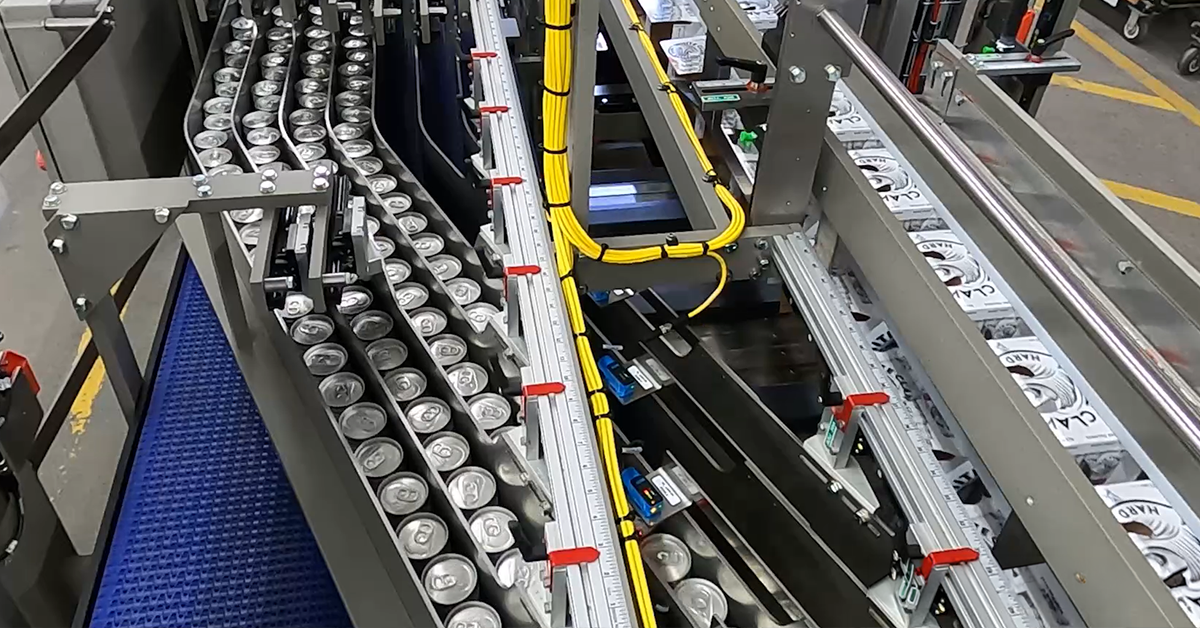
A multipacker is a machine intended to pack multi-serve products into 4 to 30-count, fully-enclosed cartons. Products packed can vary in diameter and height, as well as in material (e.g. aluminum, glass, plastic, etc.). We often see these machines sold to operations in the food, beverage, and pet industries, but for the sake of this article, we’ll focus on beverages from here on out.

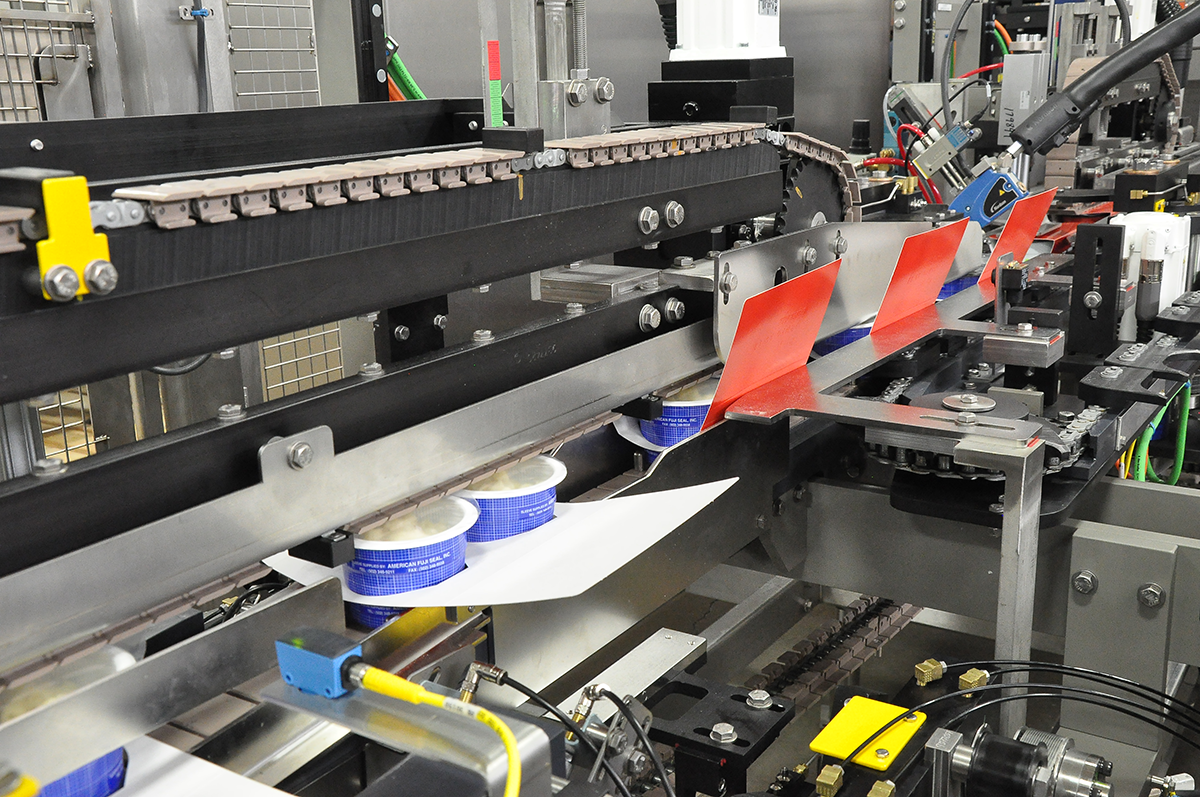
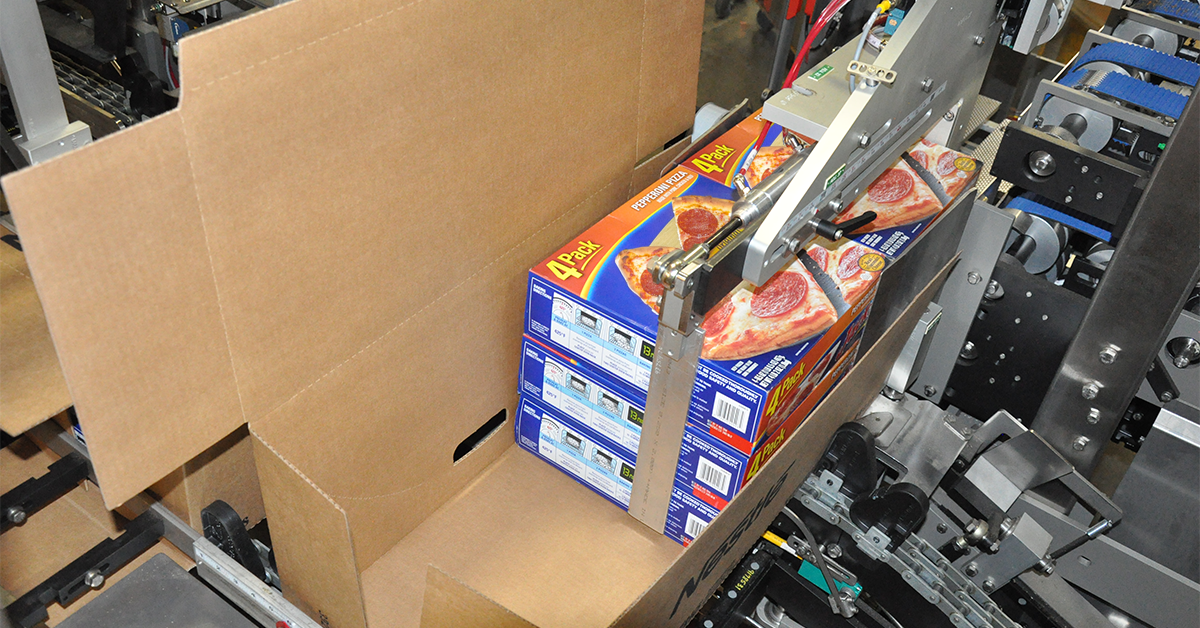
Fig 1. Cartoner product

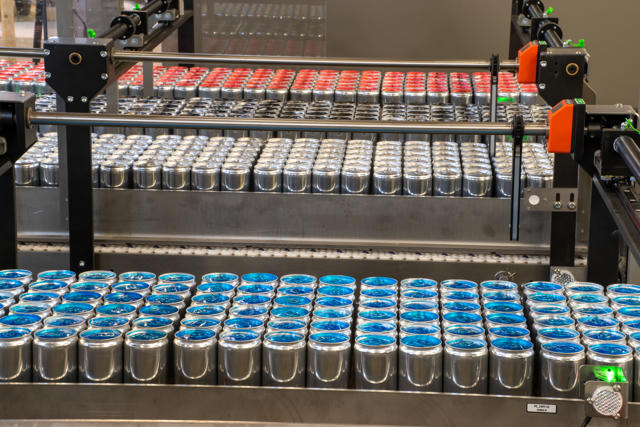
Fig 2. Multipacker product
At first glance, multipackers seem to be almost the same as cartoners. It’s true that the two are very similar, but the key difference is in their grouping focus. Cartoners are designed for single-serve, individual products, while multipackers are designed for a multi-pack, grouped focus. In some cases, either a cartoner or multipacker can be used, but the difference is made in the machine’s design intent.
The Three Main Pricing Tiers
While it is often difficult to break packaging automation into distinct pricing tiers, multipackers are somewhat of an exception. Multipackers tend to fall into three distinct categories, with the main difference being speed.
1. Baseline – The Low-Speed Intermittent-Motion (IM) Multipacker
The baseline tier multipacker is easily the most distinct from the other two tiers, and that’s because it’s an IM machine. This means that the machine stops and starts, moving product between stations. It’s the machine most suited to integrate with a manual packaging line, as its speed tends to be lower and stations provide room for hands-on work. It is also suitable for low-speed packaging lines.
- Speed: ~50 cartons per minute (CPM)
- Price Range: $200k-$650k
2. Mid-Range – The Continuous-Motion (CM) Multipacker
The mid-range tier multipacker is usually a basic CM system. This means that the stopping and starting motion has been eliminated, and the machine performs all sorting and packing functions itself, in a fluid, continuous, motion. It tends to be chosen for mid-level packaging lines, who are either upgrading from an IM system, or who are just looking for a standard CM multipacker – no need for anything too fancy, but ready to fully automate.
- Speed: Up to 350 CPM (possibly with a limited size range)
- Price Range: $350k-$875k
3. High-Range – The High-Speed CM Multipacker
The high-range tier multipacker is another CM system, but especially fit for high-speed operations. Large and highly developed packaging lines tend to opt for this option, especially if they have a particularly high sustained throughput. Given the size of these operations, they’re usually looking to add onto the standard high-speed machine, making a custom design with additional components to increase productivity and operational ease.
- Speed: ~350 CPM (with size range flexibility)
- Price Range: $950k-$1.5M
Beverage Multipacker Comparison Table
Pricing Tiers
Type of Motion
Speed (in CPM)
Price Range
Baseline
Autopopulated Value (Mobile Only)
Low-Speed Intermittent
Autopopulated Value (Mobile Only)
~50
Autopopulated Value (Mobile Only)
$200k – $650k
Mid-Range
Autopopulated Value (Mobile Only)
Continuous
Autopopulated Value (Mobile Only)
Up to 350 (possibly limited size range)
Autopopulated Value (Mobile Only)
$350k – $875k
High-Range
Autopopulated Value (Mobile Only)
High-Speed Continuous
Autopopulated Value (Mobile Only)
~350 (with size range flexibility)
Autopopulated Value (Mobile Only)
$950k – $1.5M
What Are the Major Budgetary Impacts?
You’ll notice that each of these tiers sports a price range, rather than a fixed price. That’s because price depends largely on the vendor you choose to go with – they’ll offer different qualities of machines, with different features, and different support contract options. Beyond the price ranges, the cost of your machine will be dependent on the specifics of your operation.
Here are some of the greatest factors to recognize and budget for:
Carton Type
Machines are built to standardly run a typical pre-glued, end-load carton – in size, shape, and material. So, if your cartons vary from what the machine is built to tolerate, you’ll see an increase in components, lending itself to greater cost and complexity.
-
Profiled Cartons
Have minor flaps that follow the contour of the product inside – especially round product. This gives the carton a “finished” appearance. It is often done with a “no-top-flap” carton where the upper major flap is removed to show the product inside.- Price: ~$150k adder; will also result in a 5-foot footprint increase
-
Dual-Tier Cartons
Adjusting the machine to be capable of running cartons with two, stacked tiers.- Price: ~$600k-$800k adder (generally increases the price by 70-80%)
- Example of cost increase: If a single-tier multipacker was going to cost around $1M, the dual-tier version, will cost roughly $1.8M-$1.9M – a relatively involved upgrade, with a price to reflect that.
Product Type
Again, multipackers are designed to run a standard product shape, size, and weight (with some possible tolerance, which will vary from vendor to vendor). So, anything that varies from the tolerable range will see additional components, which add cost and complexity.
Especially unique product formats that always add cost and complexity include:
- Sleeved cans
- Breakable materials (e.g. glass bottles)
- Unusual shapes (e.g., square or sqround)
- Extreme weights
A factor that may dramatically change your buying journey is the experience of your vendor. The more knowledge, experience, and understanding they have with your unique product format, the greater your accommodation may be.
The reason product type matters so much is that it can change infeed handling. How is product controlled and metered? Do you need unique conveyors? Are you looking to add a hand-load system (~$100k adder)?
Pack Count or Pack Pattern
This factor should be considered if you run a range of sizes and diameters. If your pack count is out of the typical range (e.g. a 35-count, in a 4-30-count system), or you have a specific, unique pack pattern, you will see a cost increase. This reflects the additional components required to accommodate your unique needs.
- Price: $75k-$200k
Carton Board
Consider the quality of your board, especially if you are running high speeds. Is there concern of warping or bending? Can it tolerate rigorous handling? Board age can have a significant impact on operations. And board quality requirements tend to differ between manual and automated systems, so if you are automating for the first time, you may want to spend extra time evaluating your board.
Pro Tip
Another factor you should be aware of is if you are locked in a board contract with a specific supplier. They may have additional requirements regarding your machine, or they may hold you with your specific board.
Discharge Requirement and Manipulations
A factor a lot of buyers underestimate is the cost incurred by having product manipulations installed on your machine. If you are going to reject, turn, divide, or do any other rotations or movements with your product, you will see an increase in cost and complexity.
- Price: $15k-$400k (depends on difficulty and number of manipulations)
What Sorts of Adders Should I Consider?
Once you get into the higher-range solutions, you may also be interested in buying additional “adders” to provide an extra boost in ease and productivity. These adders can be highly specific in function, or just conveniences, or even requirements from certain regulatory agencies or retailers.
Here are some of our most requested adders:
Mainly focused on carton squareness.
- Price: ~$25k-$50k
- Servo-driven tuckers
- Servo overhead squaring
- Servo live-compression belts
Used to encourage positive carton opening at higher speeds.
- Price: ~$120k
These are components that range in number, which you can add on, to automate some of your changepoints (at Douglas, you can automate up to six on your multipacker). Capabilities and price will vary by vendor.
- Price: $50k-$75k
- Change parts are the alternative to auto adjust changepoints. They usually include selector bars, seating wheels, and magazine picture frames (~$15k per set).
Lower machine profile to avoid reaching or lifting overhead; helps avoid stress injuries.
- Price: ~$80k-$120k
Prepares infeed by releasing cans in time to ensure there are no short-count cartons at start-up.
- Price: ~$10k-$15k
Laser-coding assists by applying codes, expiration dates, and barcodes to your carton.
- Price: ~$10k-$15k for integration. The laser-coder itself may need to be purchased separate from the integration, and will vary by vendor (ink jet coding is not preferred due to ink contamination of the machine and cartons).
The pitch is the distance between cartons, either fixed (the same across the board) or split (able to change pitch between packs).
- Price: ~$75k-$150k. Depends on what format you’re accommodating, and how great your mix is from smallest to largest
Depending on the type of product you’re running, you may need to adjust machine materials and/or design to accommodate frequent sanitation measures (e.g. washdown).
- Price: ~$50k-$200k
Note: If you want to pack multiple product SKUs into the same carton, you may need variety pack capabilities (automatically combines different varieties into the same carton, in a cohesive pattern). You’ve likely seen this in beverage flavor varieties or sauce samplers. Accommodation for variety packing will impact price.
Douglas manufactures a variety-pack-specific system called Prisma. Take a look at the Prisma system, as well as its capabilities for more learning.
Spec Details to Have for Vendor Meetings
When you sit down to have a conversation with a vendor, they will ask about your operation specifics. This gives them an idea as to the sort of accommodations you’ll need, as well as a cost and timeline estimation.
To make sure you are prepared, we’ve talked with our Beverage Sales Manager and curated a brief list of questions to have answers for, before talking with vendors (view the in-depth, printable checklist here):
Come with these answers prepared and you’ll get to the nitty-gritty details much faster, and start out the buying process on a high note.
Where Should I Go from Here?
Regardless of operational level and machine needs, budgeting for beverage multipacking can become a stressful process, which may seem endlessly complicated. Consider the factors we’ve listed above before you start – evaluate the operation you have, the one you’d like to be, and the components that will get you there.
Once you’ve evaluated your operation, talk to a vendor. Have them walk you through the buying process with more budgetary specifics. Consider machines, components, adders, and contracts; have them answer your questions. With a bit of planning and good communication, you can own your buying process.
Ready to Collaborate with a Vendor?
Schedule a discovery call with Douglas. Our specialists will come alongside you, wherever you are in the buying process, and highlight specifics, evaluate your needs, and answer your questions.