Introduction
If you’re budgeting for a top load case packer, you’re likely asking one of the most critical and complex questions in the buying process:
‘How much is this going to cost us?’
And like most capital equipment purchases, the answer is … it depends.
However, this article will give you the budgetary price ranges you can expect, along with the specific factors that drive those prices. Whether you’re buying your first case packer or upgrading a legacy system, knowing where costs come from empowers you to plan—and purchase—more confidently.
What is the Starting Price of a Top Load Case Packer?
A basic, standalone top load case packer—no erector or sealer, no integrated modules, handling a single recipe at standard speeds—starts around $400,000. This would typically be a machine running around 100 products per minute. On the lower end, some even more simplified loader models start at about $300,000 but have reduced flexibility and fewer SKU capabilities.
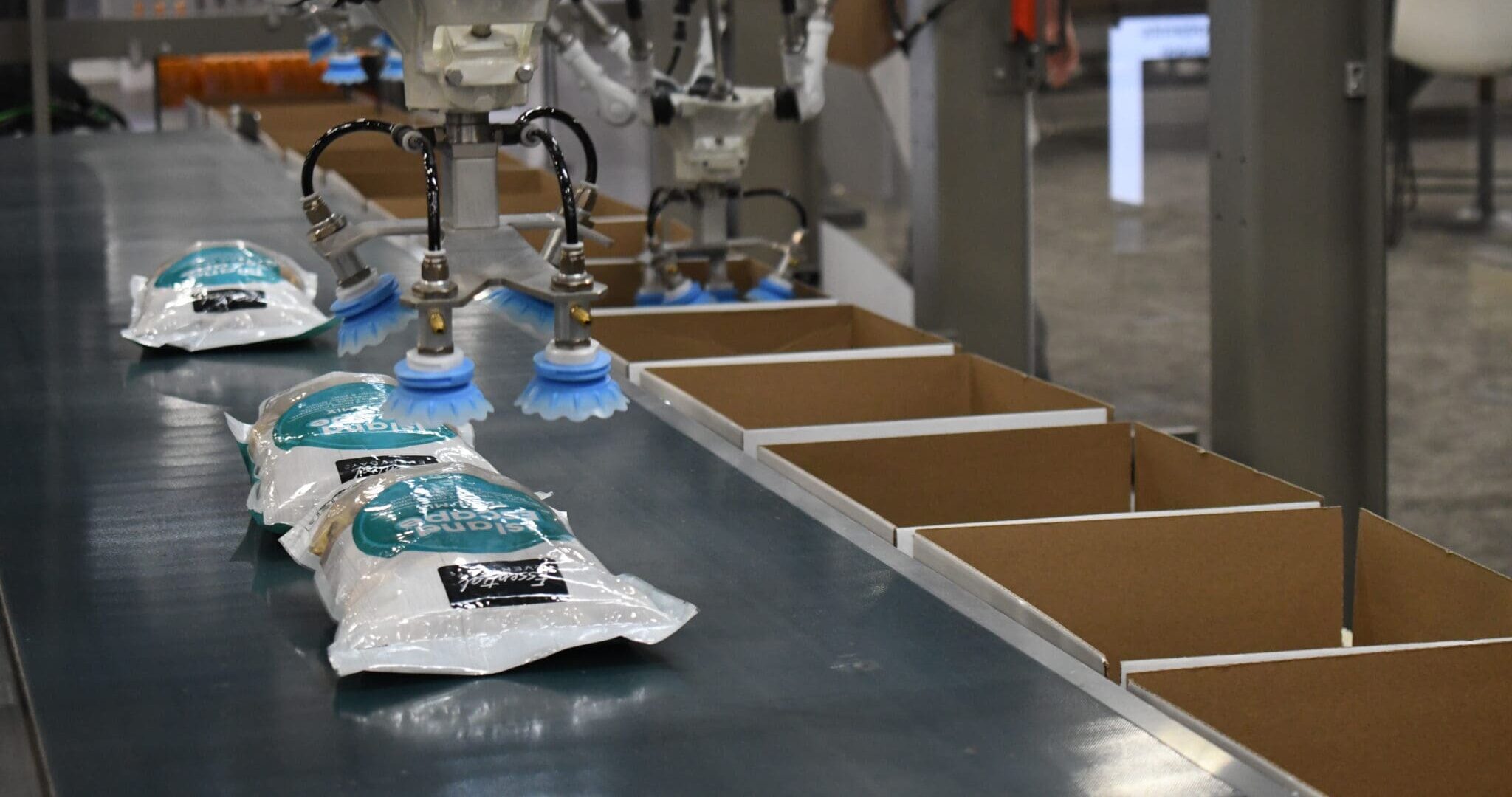
Robotic top load case packing solutions with capabilities around 45 picks per minute with a single robot also start around the $300k range.
Top Load Case Packer Budget Price Ranges by Application Complexity
Entry-Level
(Single SKU, Low Complexity)
Rigid or Flexible
Flat Pack
25-100
$300,000 – $400,000
Standard Mid-Speed
(Moderate Complexity, Few Recipes)
Rigid or Flexible
Vertical or Flat Pack
100-150
$400,000 – $600,000
High-Speed
(High Complexity, Few Recipes)
Rigid or Flexible
Vertical and / or Flat Pack
150+
$600,000 – $750,000+
Integrated Erect + Seal
Rigid or Flexible
Vertical and / or Flat Pack
Any
Add $140,000 – $350,000
Full Robotic Solutions
Rigid or Flexible
Vertical and/or Flat Pack
45-235 picks / minute
$325,000 – $625,000+
Note: These are ballpark ranges intended for early budgeting. Final costs depend on multiple factors like product orientation, product shape, number of SKUs, integration level, and floor space constraints.
What Drives Up the Price of a Top Load Case Packer?
Once you move beyond a basic, single-SKU system, pricing increases based on several key factors. Here’s what you need to consider:
1. Speed Requirements
The faster your operation runs, the more sophisticated your equipment needs to be. Higher speeds often require more complex configurations, advanced motion control or additional robotic cells to keep up with demand. As speed goes up, so does the engineering complexity and system cost.
BUYER’S TIP
Always align your speed requirement with actual throughput needs—don’t over-engineer for the sake of headroom. Consider removing low running SKUs to simplify and remove overall cost.
2. Number of SKUs and Changeover Needs
More SKUs typically means more change parts, tooling and adjustment points. If your line frequently changes recipes or pack patterns, you’ll need a system designed for fast, efficient changeovers, which can add engineering complexity and comes with added cost.
BUYER’S TIP
Consider limiting the requirements per piece of equipment and how that might affect cost. If applicable to your application, robotic solutions can offer flexibility with fewer change points.
3. Pack Orientation & Product Manipulation
Do your products need to be placed in a specific orientation, layered in multiple tiers, or packed in a specific retail-ready configuration? The more manipulation or conditioning required to get your product into the case or tray properly, the more equipment and programming complexity is involved.
BUYER’S TIP
Clearly define your pack pattern requirements early. If your goal is a specific shelf-ready appearance or orientation of the products (different than they are arriving), mention it during your discovery process as it can impact the design.
4. Integrated Modules: Erectors & Sealers
Some buyers want a fully integrated solution that forms, loads and seals all in one frame. Others prefer a modular system that spaces out these components. Your decision not only affects price but also impacts floor space and potentially line rates.
BUYER’S TIP
Modular components can be repositioned or can utilize conveyance to increase overall line efficiency, while integrated solutions offer a smaller footprint for tight spaces.
5. Customer-Specified Options
Custom features like washdown options, safety certifications, vision systems, automated changeovers, etc. all add complexity. In some cases, these are non-negotiable add-ons but typically move you into a more custom, engineered solution.
BUYER’S TIP
Limiting these options as much as possible is an obvious way to save costs. If that’s not feasible, informing vendors upfront of your specific needs can save a significant amount of time and rework later.
What Other Factors Can Affect the Final Price?
Adhesive Type
Utilizing glue versus tape for adhesive can affect machine price due to additional componentry needed.
Product Type
Certain systems are designed to handle rigid or flexible packages while others can handle both. The primary package you are running can limit your options thus affecting the price you’ll pay.
Additional Integrated Components
Conveyance, metal detectors, labelers, check weighers—integrating outside componentry into equipment adds engineering complexity and increases overall cost.
Quality
Not all machines are created equal. Consider asking questions to help determine the quality and robustness of the overall build, which can impact long-term maintenance and repair costs.
Service & Support
OEMs approach support in differing ways and the quality of service you receive can depend on which vendor you choose. Some support options may be included, but others can come at an additional cost. Conversations to align expectations may be beneficial.
What Does a Buyer Need to Consider Before Budgeting?
If you’re exploring automation for the first time or replacing legacy equipment, the key is to clearly define:
By clarifying your needs up front, you can avoid costly over-engineering or under-buying.
Final Thoughts: Budgeting for a Top Load Case Packer
At the end of the day, top load case packing solutions start around $300,000-$400,000, but they can easily reach $750,000 or more depending on your speed, SKU complexity, and integration level, and handling requirements:
When you’re evaluating vendors or options, remember: