Introduction
At a Glance
Douglas designs and manufactures custom secondary packaging equipment, specializing in automation for consumer packaged goods (CPG) producers. Our key line-up includes:
- Case/Tray Packers
- Shrink Wrap Systems
- Cartoners, Sleevers, Multipack Systems
- Variety Pack Systems
Beyond this line-up, we also feature systems for sustainable packaging, magazine loading, and digital tablets for machine guidance.
We regularly work with a variety of markets, customizing machines to fit the needs of each. The scope of our work ranges from configuring existing systems to engineering brand new machines.
If you’re scoping a new packaging automation project and considering Douglas, this article is for you. We’ll cover all of our product line-up from packaging materials to machines – and highlight a few other key items like our sister brand, INSITE®, and the difference between primary, secondary, and tertiary packaging.
In short, we’re here to tell you whether our experience and line-up will be a good fit for your project, and to point you on to next steps or to other vendors.
In this article, we’ll cover:
- What secondary packaging is and what it includes
- The range of machines Douglas manufactures
- The twelve CPG markets we regularly serve
- What we don’t manufacture and our sister brand, INSITE
- Your next steps following this article
What Is Secondary Packaging?
The term, “Secondary Packaging,” is used throughout our website, in our customer communications, and all over our industry. But we also frequently explain what exactly secondary packaging covers.
Secondary packaging is the middle portion of a comprehensive packaging line.

Primary Packaging – The container or format that the product is put in

Secondary Packaging – What the primary container is packed in for storage and transport

Tertiary Packaging – How secondary packages get grouped together on a pallet for transport
Secondary Packaging’s Scope and Main Materials
The packaging that falls under “secondary packaging” tends to include corrugate cases and trays, shrink-wrapped packages, paperboard cartons, and variations of these three categories. It does not include shampoo bottles, cans of carbonated beverages, or candy bar wrappers.
As such, we work with three main materials:
- Corrugate – Standard cardboard, folds into boxes and trays
- Paperboard – Thin paper-based board, folds into cartons
- Shrink Film – Plastic shrink that forms to its interior product
Within these three material categories, we’ve seen nearly every variation, and have dealt with numerous product formats. These primary titles describe the material, rather than the shape or format of the container or the interior product.
What Does Douglas Make?
Our three biggest families of machines are categorized by the material the machine handles, and the way the primary packages are shipped and sold. They are as follows:
1. Case and Tray Packers
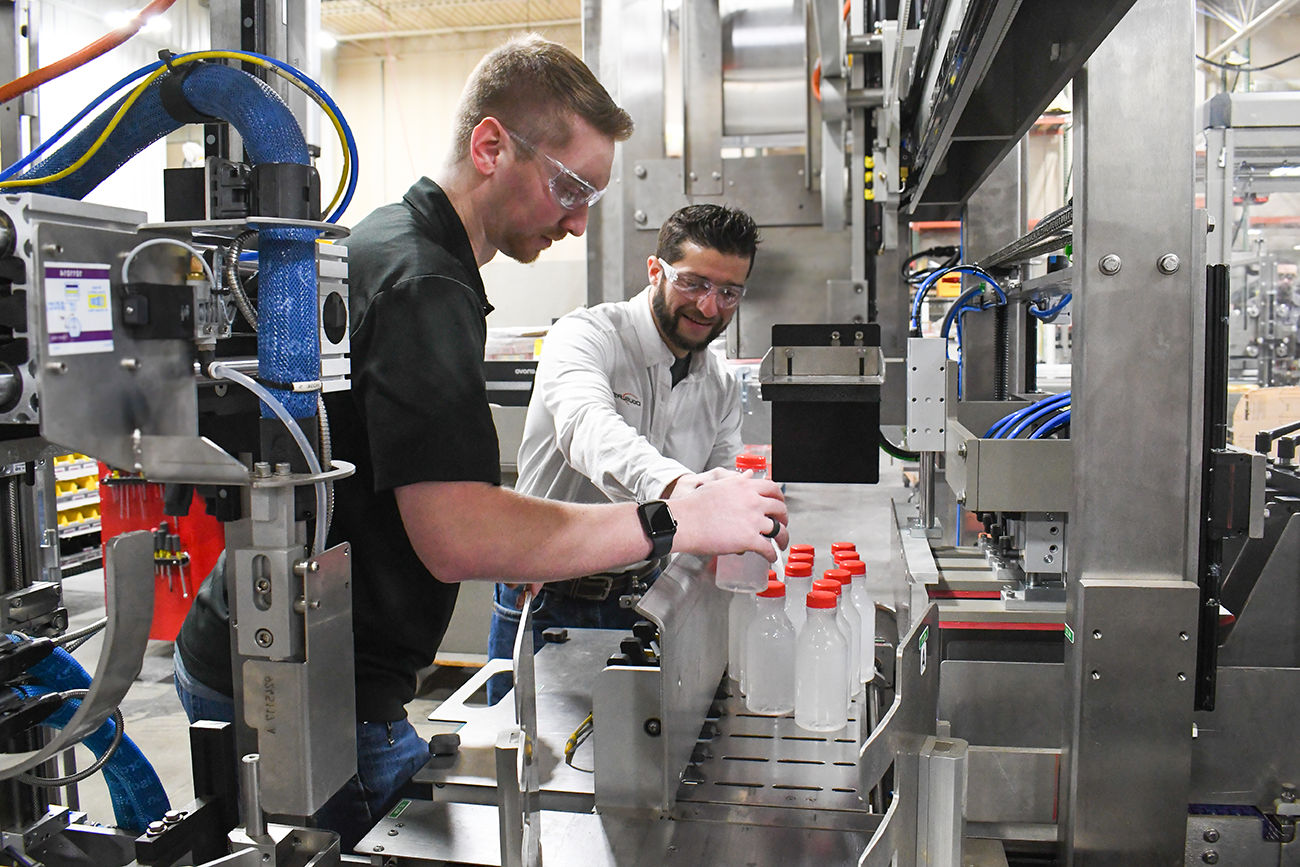
These machines usually work with corrugate, and pack primary products into cases (boxes) or trays (half-boxes). This is our largest category, and what we’re primarily known for.
These machines can run either:
- Horizontal (Side) Load – Product is pushed into the case, horizontally
- Top Load – Product is dropped or placed into the case from above
Our mid-speed lines run 45-60 cases per minute (CPM), while our high-speed configurations can go much faster.
2. Shrink Wrap Systems
These machines bundle products in shrink film, using extended heat tunnels. These are used most often for beverage multipacks and club-store packs (for wholesalers), though shrink film is used for a vast variety of products that just suit film better than corrugate.
Shrink wrap systems come in different formats, based on type of wrap:
- Shrink Wrappers – Capable of shrink wrapping pre-packed trays
- Shrink Packers – Capable of packing and shrink wrapping trays and shrink wrapping products without a tray
- Multipackers – Capable of shrink wrapping products without a tray
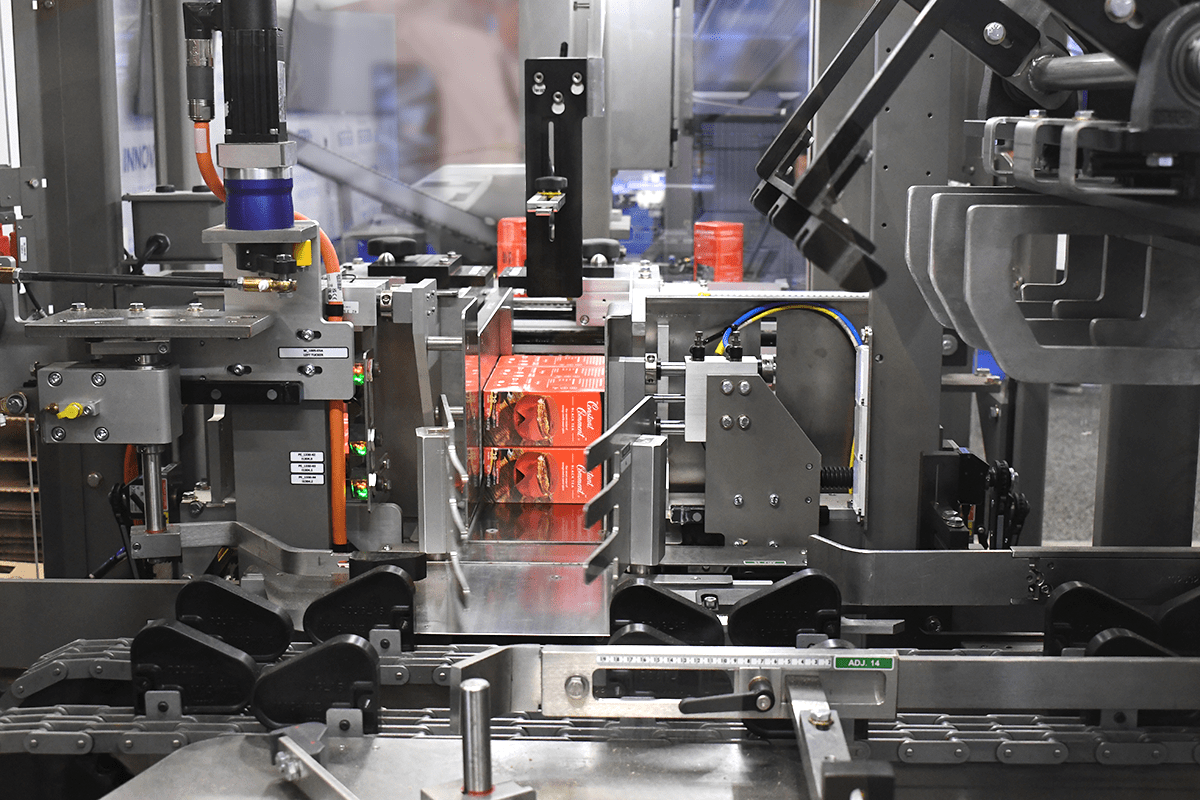
3. Cartoners, Sleevers and Multipack Systems
These machines work primarily with paperboard, which is a thinner material often used for cartons (another sort of box). That’s the factor that ties these three machines together, but their specific functions differ slightly based on final product appearance:
-
Cartoners – Place primary product into a folded paperboard carton; often used for pouches, tubes, small cartons, or blister packs
- Note: Our cartoner systems run up to 325+ cartons per minute
- Sleevers – Wrap product groupings in paperboard sleeves (e.g. applesauce or yogurt cups)
- Multipack Systems – Work like a cartoner, only they specialize in retail-ready units like frozen vegetables, cans, or medications
Quickly growing as subspecialties in this category are variety pack systems. They combine up to six different stock keeping units (SKUs) in one carton, case, tray, or shrink bundle (e.g. samplers, multi-flavor beverage packs).
Alongside our three main families of machinery, we have a set of newer technologies that can run in tandem:
- Sustainable Beverage Packaging: Paperboard Ring Applicators – These are designed to offer a sustainable alternative to traditional plastic rings, meeting new government regulations.
- Robotic Magazine Loading – A robotic system that automates the repetitive task of loading case/tray packer magazines.
- GuidePoint® – A tablet-based operator support system that offers an interactive, user-friendly interface to replace traditional manuals and documentation on Douglas equipment.
Across all of our lines, our work ranges in scope from configuring a custom solution through existing parts and machining, to engineering an entirely new system to meet hyper-specific customer needs.
What Markets Does Douglas Serve?
All of our machines are used in all of our markets. But what changes across markets, is the machine specifics to suit – the pack pattern, substrate, speed, and operating environment.
Currently, we organize our work around twelve common consumer packaged goods (CPG) markets, but we serve just about any CPG industry:
- Bakery and Confectionery
- Bottled Water
- Carbonated Soft Drinks
- Coffee/Tea/Juice
- Condiments and Sauces
- Dairy
- Frozen Food
- Functional Beverages
- Personal Care and Household
- Pet Care
- Snacks
- Spirits and Wine
Our markets are divided as such because each requires unique specialties for its machines. For example, dairy and frozen food lines run in cold, wet, washed-down environments. That changes the materials, sealing, and sanitation design of the same case packer that would run in a dry snack foods environment.
INSIDER NOTE
At Douglas, we have sales specialists that oversee each of these markets. This means our specialists are aware of things like government requirements, sanitation and washdown expectations, environmental factors, and the sorts of add-ons that suit each operation. This ensures that our team is best primed to serve our unique customers
If your operation falls within one of the twelve markets listed above, it’s almost a guarantee that we’ve packed your product type before. If your operation falls outside of these markets, that doesn’t end the conversation. Instead, it means that we need to know the specifics of your operation, see which specialist it’s best suited for, and either find an existing platform that fits or engineer a system from scratch.
What Does Douglas Not Make?
Perhaps one of the most helpful distinctions we can make, is to outline what isn’t included in our product line-up. Here are the most common pieces of equipment that we get mistaken for producing:
-
Primary Packaging Equipment – We don’t design or build any equipment that touches the product before it’s in its primary container. That means we don’t work with fillers, capping machines, blister sealers, etc.
- Note: We have worked with key partners in the past to develop this sort of primary equipment, however that still lies beyond our typical scope and standard line-up.
- Supplementary In-line Equipment – We don’t build equipment like labelers, inspection systems, and other in-line systems that help supplement end-of-line processes. However, we do offer these machines as add-ons to other equipment in our line. Often this sort of equipment is sourced from specialist suppliers.
- Stand-Alone Conveyors – We don’t sell conveyor systems as a stand-alone product. When our projects need conveyors between or around our machines, we integrate suitable third-party conveyors.
- Stretch Wrappers – We don’t produce tertiary stretch-wrapping equipment. This can be confused with shrink wrapping, which we do produce (as it falls under secondary packaging).
One piece of equipment that isn’t on this list: palletizers. Those technically fall under tertiary packaging, and we don’t produce them. However, our sister brand, INSITE, does offer a palletizing system.

Who Is INSITE? And What Do They Specialize In?
INSITE is our sister brand. It is a Douglas company, established in 2017, that focuses on more standardized end-of-line systems.
The key difference is that Douglas builds custom integrated equipment, usually for large and complex CPG operations. INSITE builds standardized equipment that is intended for modular automation, and usually sells to smaller operations who are starting to introduce packaging automation to their lines – those who don’t require “custom” systems.
INSITE takes the same experience and intentionality as Douglas, but puts it toward designing standardized systems, while Douglas works on larger, custom systems. It’s the same framework of engineering, but designed to fill different needs. INSITE’s line includes case erectors, sealers, loaders, and palletizers.
Where Do I Go From Here?
If you’re interested in scoping a new project with Douglas, work on preparing answers to key questions for initial conversations:
- What pack patterns does your line include?
- What is your throughput target?
-
How custom does your packaging need to be?
- This can help determine if INSITE may be a better fit.
- What does your existing line look like upstream and downstream?
Your answers to these questions will go toward shaping what your Douglas project will involve. Having this information at your first sales call will expedite the beginning of your project, and skip the extra waiting while your team gathers information.
Ready to Scope Your Project with Douglas?
Schedule a discovery call. Our market specialists will help evaluate a system to suit your needs, answer your questions, and manage add-ons and designs to build your custom machine.