Introduction
At a Glance
A good robotic magazine loader can lead to reduced injuries and strains, greater value-adding work for your operators, and developed line efficiency.
To find a good robotic loader, look for a system that:
- Matches your speed and throughput rates
- Processes through pallets with minimal issues
- Faults correctly, when issues do arise
- Requires little operator intervention
- Tolerates some material variability
- Doesn’t raise false triggers or flags
There are a lot of details to look for in a good robotic magazine loader. But a trustworthy team and vendor can take you a long way in the right direction.
Magazine loading is a small, repetitive step, at the front of your secondary packaging line. But when it’s done poorly, it affects how your products get off the floor and into the hands of your customers. That’s why it’s important to have a steady, reliable operator carrying out magazine loading for your line.
Manual loading is often the preferred solution, but with ergonomics strain and staffing challenges, it can become a bottleneck. That’s when many operations seek out a robotic magazine loader – and just the same, you want a good one that will be the steady and reliable frontman for your line.
In this article, we’ll cover:
- The who and the why of robotic magazine loading
- The features that define a quality robotic magazine loader
- The difference that a robotic magazine loader can make on your line
- What to bring to the table as a prepared buyer
- What to expect from and how to identify a good vendor
What Purpose Does a Robotic Magazine Loader Fill?
Robotic magazine loaders were designed to fill the role of magazine loading, just as reliably as a manual worker. Through years of development, robotic loaders have found their own niche. But their basic function is still roughly the same:
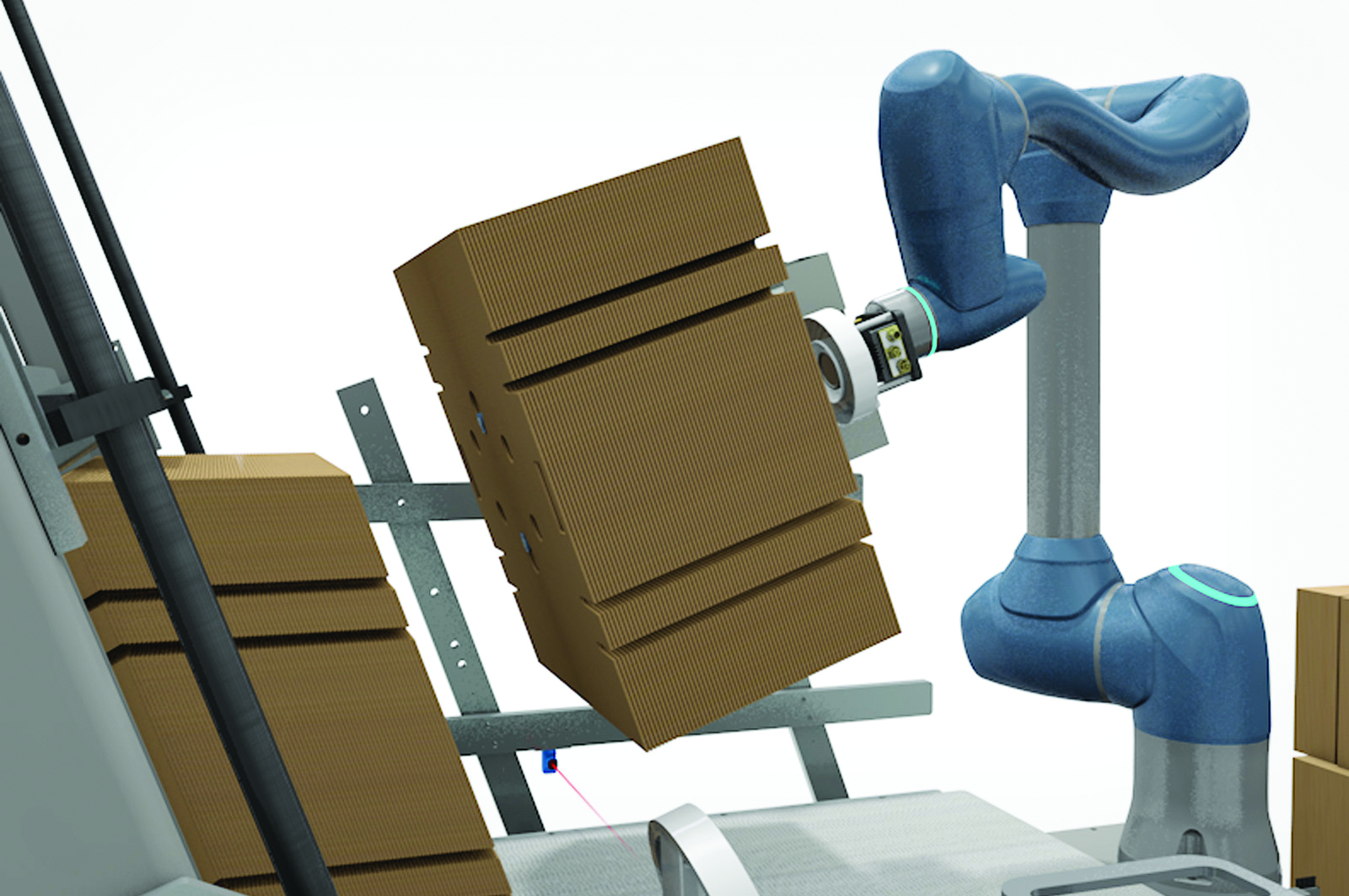
A robotic magazine loader is a robotic system that loads a stack of flat case blanks (usually corrugate) into the magazine of a case or tray packer.
How Does a Robotic Magazine Loader Work? Three Basic Steps:
- The robot acquires a stack of blanks
- It conditions and transfers the stack of blanks to be put in the magazine
- It places the blanks in the magazine
Then, it repeats those three steps in a continuous cycle, as the packer works through the case blanks.
Though a small step, magazine loading has a lot relying on it – your whole downstream line, really. So, just like a manual worker, it’s crucial that the robotic magazine loader does its job well.
Note: If you’re still wondering whether you should switch from manual to robotic magazine loading, take a look at our comparison article: “Manual vs. Robotic Magazine Loading: Which is Better?”.
What to Look for in a Good Robotic Magazine Loader?
You don’t see the difference quality makes in the spec sheet, but only once it’s installed on your production floor. It shows in how well you’re able to trust and rely on your machine.
Here are some of the things to look for in a robotic magazine loader – and how to find them:
Capability to Look For
How to Find It
Matches line speed and meets throughput goals
Processes through pallets with minimal issues
Faults correctly when issues do arise
Requires little operator attention and intervention
Tolerates some material variability
Has a reliable, robust safety system
These points are more than smooth processing – they’re the key to walking away from the machine and trusting it to be reliable. They lead to a machine that runs predictably and becomes a line asset, rather than a line hindrance.
What Features Aren’t Necessary, But Add Value?
Beyond excellence in basic functionality, you may be interested in looking for robotic loaders that have these value-adding capabilities:
Blank Orientating
The robot can view and correct blank inconsistencies by orienting cases (e.g. printed cases can be turned in proper direction).
Lift or Elevator Kit
Robots standardly accommodate 48-inch pallets, but lift or elevator kits raise the robot to reach taller pallets (e.g. for European 1.8-meter pallets).
Waste Material Handling
The degree to which a robot can remove waste materials like dunnage, straps, slip sheets, etc., reducing the need for operators to intervene.
Pallet Flexibility
The robot can begin pallet processing upon startup at any completeness (e.g. after changing over a case packer, the robot can begin with a partial pallet rather than needing a full pallet).
How Does a Robotic Magazine Loader Impact Your Line?
Taking the time to find a good robotic magazine loader affects more than your capital budget and the next few months; it affects the long-term performance of your line.
What Issues Can a Bad Robotic Magazine Loader Cause?
A bad robotic magazine loader can cause serious damage to your line. Here are three potential results of purchasing a bad robotic loader:
Degraded Line Performance – The robot calls the attention of operators too often, reducing the operator’s overall capacity for value-adding work.
Lost Investment – The robot ends up being a hindrance to your line, and you may have to pull it from the floor. Hundreds of thousands of investment dollars are lost.
Erosion of Vendor Trust – You lose trust in the vendor who sold you the robot; this adds strain to service relationships and makes your next purchase more challenging.
What Benefits Can a Good Robotic Magazine Loader Provide?
Oftentimes no news is good news when a robotic loader is functioning properly. But quiet benefits can make a big difference in the long-term. Here are three potential improvements from a good robotic magazine loader:
Reduced Ergonomics Strain – The operator’s position goes from kneeling, lifting, and loading, to monitoring and performing minor adjustments.
Refocused Operator Attention – The operator can contribute more of their time to greater value-adding activities.
Increased Profit and Growth – Because of the shift in your operators’ attention, you can increase line value and efficiency over time.
How Should I Factor in Robotic Magazine Loader Cost?
A robotic magazine loader costs around $300,000 – $500,000, depending on vendor and model. Oftentimes, we see an average price of $350,000 – $400,000.
On the whole, price is not a very accurate judge of quality. Our team believes that judging the capabilities and functioning of the machine is a far more accurate indicator of a good robotic magazine loader.
Pro Tip
As a buyer, it’s important that you come to understand what is included in the price you’re seeing. Are customizations already built into the quote, or is that just the base? It’s a good habit to get used to asking vendors: “What’s driving the price?”
How to Be a Prepared Robotic Magazine Loader Buyer?
To be a well-prepared buyer, come with a list of things that the vendor is going to immediately ask for – this will help expedite the buying process and start your first meeting off strong. The items to come with are:
These details will immediately provide the engineer with information that determines the sort of robotic tooling needed. It answers the initial questions that come up in their head, like:
What Are Some Common Customer Oversights to Avoid?
Part of being a prepared buyer, is having reasonable expectations – just the right amount of anticipation. Here are two common customer oversights that we see. Understanding these will help you have more realistic expectations when you meet with vendors:
How to Value Your Vendor – What Comes with a Good One?
Having a quality robotic magazine loader begins with a quality vendor. And it ends there too – when your robotic loader needs servicing, who’s your first call going to be?
Here are some of the value-adders that you’ll get from signing with a quality vendor:
- Past Experience and Knowledge – How well does the vendor understand a well-performing case packer? Do they know how a robotic magazine loader fits into that?
- Depth of Service and Support – Can the vendor cover the service and support gaps of your in-house team?
- Consideration of Overall Line – Does your vendor have a tunnel focus on the robotic magazine loader, or do they see it as a part of the greater line? Are they considering your overall efficiency goals?
Pro Tip
Is the vendor asking about the machine they’re integrating the loader on to? If so, that’s a good sign; if not (or if only asking for the sell), that should raise some red flags.
How to Prioritize the Right Robotic Magazine Loader?
While some quality markers like reliability and accuracy should be priorities across the board, a lot of “What to look for…” is dependent on what you need. The better you understand the priorities and processes of your line – and especially the state of your pallet supply – the better posed you’ll be to look for the right robotic magazine loader for you.
A lot can be helped with some intentional planning and a quality vendor. Prioritize these foundational items before you start to inspect spec sheets and evaluate quotes.
Looking for a Vendor You Can Trust?
Schedule a discovery call with Douglas. This non-commitment call can answer your questions, provide experience and knowledge, and consider the work of your whole line, as you start your buying process.