Introduction
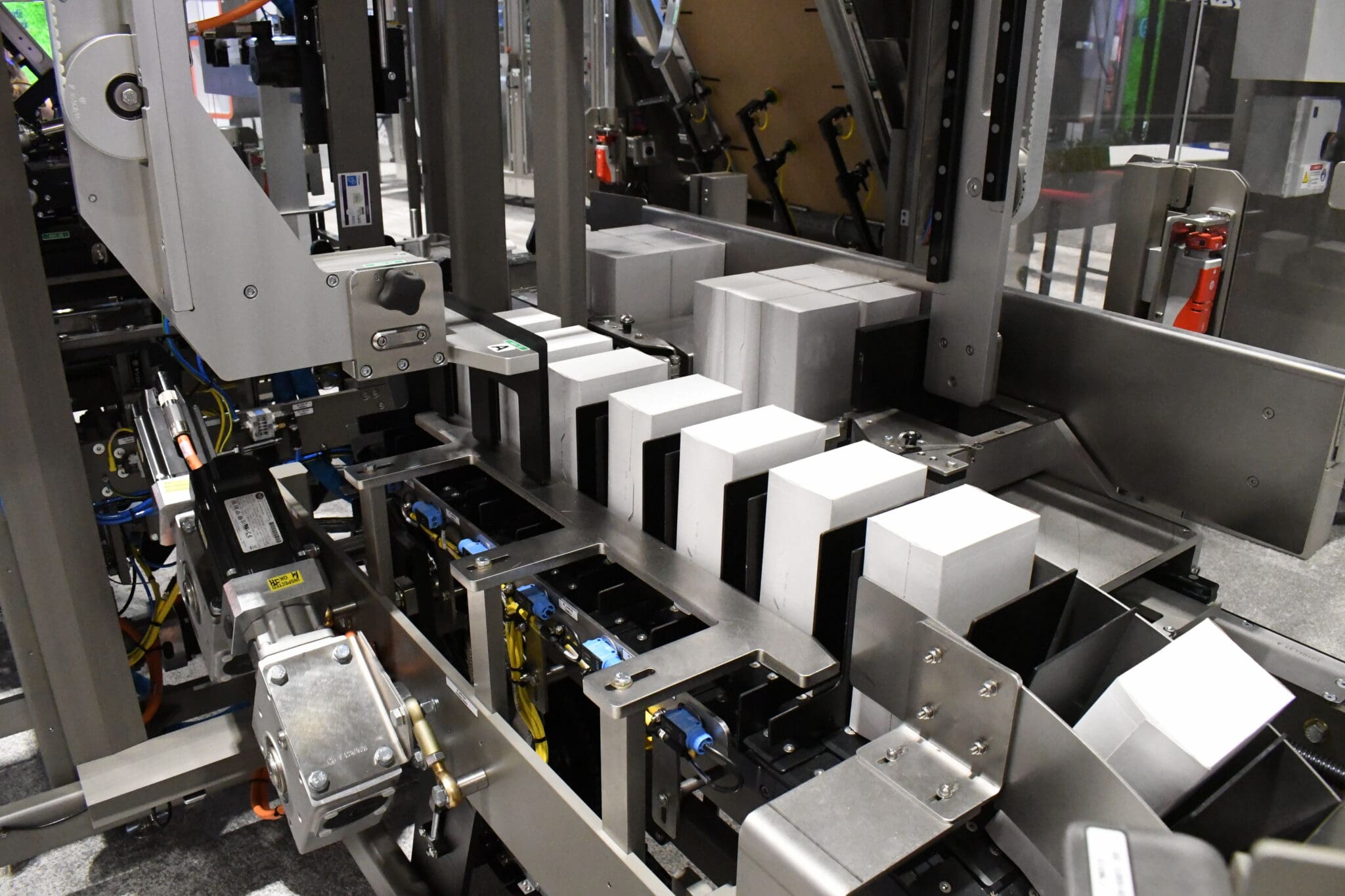
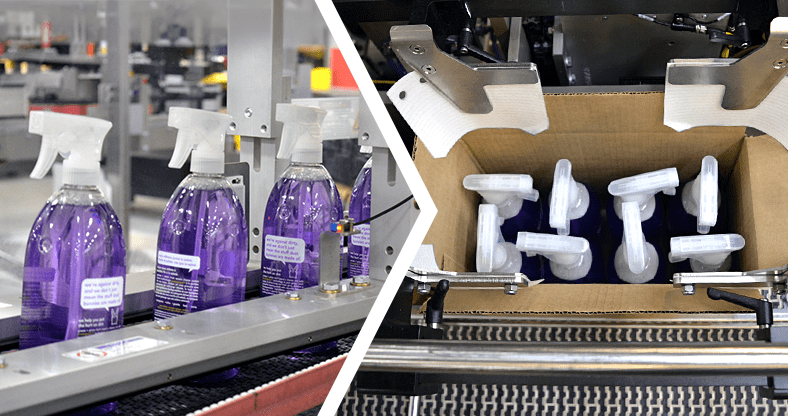
What is product orientation in secondary packaging? It describes how your primary container is positioned (which face is up, which end leads, and which side faces out) as it enters and moves through a secondary packaging machine.
It may sound like a minor detail, but it’s not. Getting orientation right early in the equipment selection and design process saves significant time, money, and frustration down the line.
Orientation Affects Almost Everything Downstream
How your product is oriented determines:
Common Orientation Decisions
The most common product orientation decisions in secondary packaging usually come down to how the product should be presented, protected, and handled from infeed through palletizing.
Key decisions include the following:
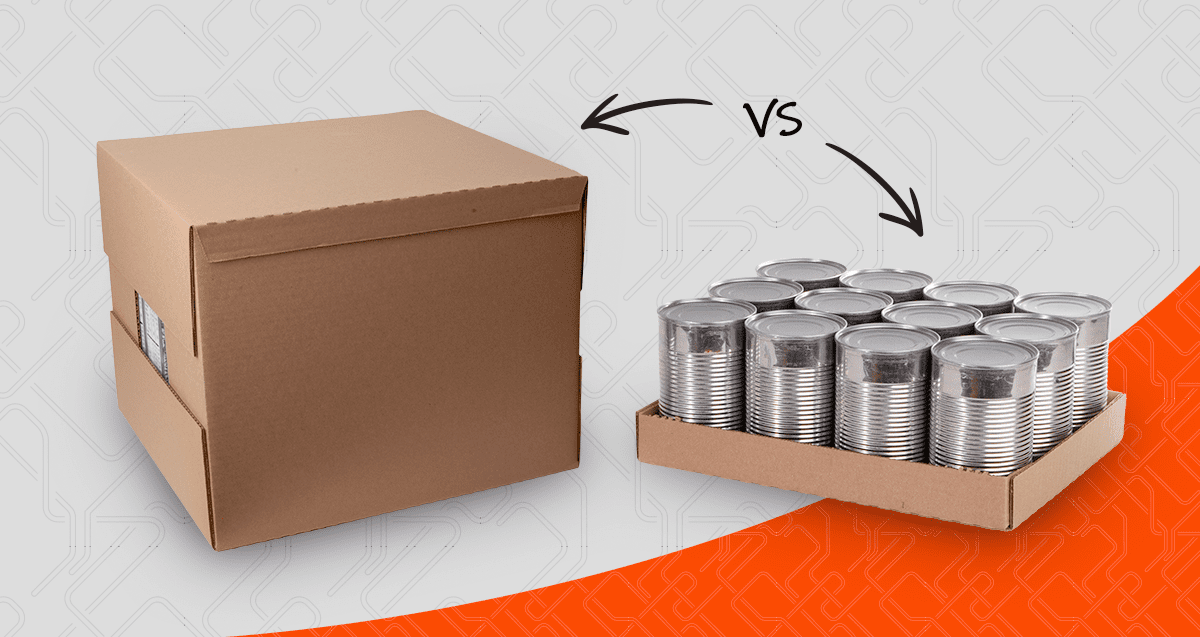
Should the product remain upright, or should it be laid flat for packing? This is one of the first and most important decisions because it affects loading method, case count, cube efficiency, and shelf presentation.
Which panel of the product should face outward in the case, tray, or display-ready pack? This matters most for retail presentation, branding, barcode visibility, and downstream shelf stocking.
Does the label, graphics, or branded face need to be consistently oriented in the same direction? This is especially important for cartons, pouches, non-round bottles, and club-store display packs.
Should the product enter and remain with its top closure up, or can it be inverted? This matters for closures, leak risk, product settling, and appearance.
Which end of the product leads through the machine and into the package? This affects timing, transfer stability, lane merging, robotic picking, and how products nest in the case.
Should every product face the same way, or should adjacent products alternate direction? Alternating patterns are often used to improve fit, stability, nesting, or pack density.
Can the products interlock or nest to reduce space and improve pack stability, or must they remain separated? This is common with tapered bottles, oddly shaped containers, and flexible packs.
Should the product be loaded into the case vertically or horizontally? This affects the type of case packer, product support requirements, and risk of scuffing or deformation.
Can products touch each other, or do they need spacing, dividers, or partitions? Orientation decisions often determine whether contact points create damage, label rub, or instability.
Does the orientation need to preserve visibility of barcode, date code, lot code, or other regulated markings for scanning, inspection, or traceability?
For bottles, jars, and similar containers, should the closure be protected from side load or compression? Sometimes the best orientation is driven less by display and more by protecting a vulnerable feature.
What orientation gives the product the best stability during accumulation, transfer, loading, shipping, and palletizing? Tall, top-heavy, or flexible products often require special consideration.
Should the pack prioritize retail appearance or transport efficiency? The most cube-efficient orientation is not always the best for display-ready packaging.
Does the chosen orientation work well for operators, retail stocking, and case opening, in addition to machine handling? A pattern that runs well on the line may still be poor for store execution.
To put it simply, engineers and packaging teams are usually deciding the best product orientation based on five competing priorities: machineability, protection, cube efficiency, presentation, and downstream usability.
Here are a few common examples of considerations when it comes to production orientation:
- Pouches: Upright for display, flat for packing efficiency
- Cartons: Front panel outward for retail, alternating orientation for tighter packing
- Non-round bottles: Label-facing for shelf impact, but often constrained by nesting and stability
- Flexible bags: Orientation is often driven by seal protection, product settling, and case appearance
When considering your product orientation, these questions can provide a practical checklist:
When to Lock It Down
Product orientation should be defined in the very early stages of a packaging line project, ideally before the RFQ goes out. By the time you’re reviewing engineering drawings, changing orientation can mean redesigned tooling, reconfigured conveyors, and significant schedule impact.
If you’re unsure about the right orientation for your application, bring it into your early technical conversations with your OEM. It’s a short conversation that prevents a long-term problem.
Need to Discuss Product Orientation?
Douglas has 60+ years of secondary packaging experience. Our specialists are ready to help answer questions and guide you through decisions regarding your product orientation.