Introduction
“Servo-driven” is one of those terms that gets used a lot in packaging equipment sales conversations, often as a shorthand for modern, precise, flexible automation. But what does it actually mean, and does it always translate into real value for your application?
The Basic Definition
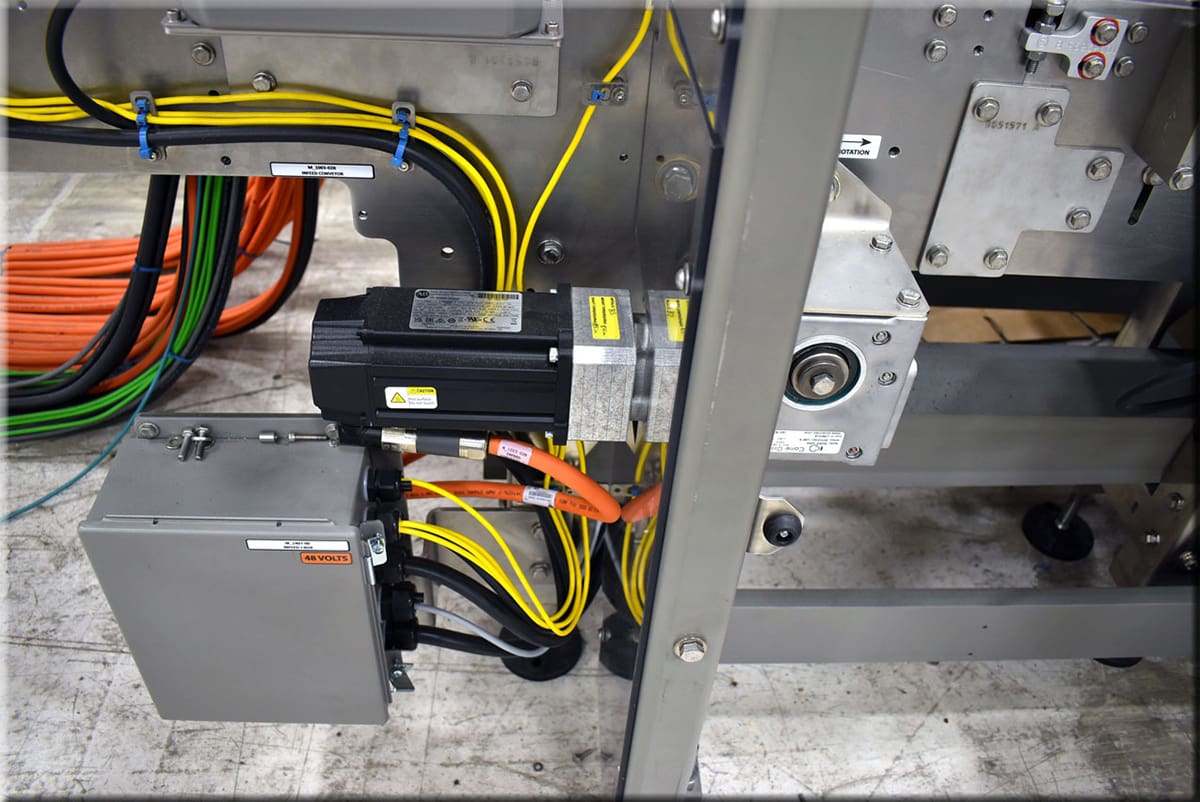
A servo-driven machine uses servo motors (electric motors with integrated feedback control) to power and control motion. Each servo motor is paired with an encoder that continuously reports its position back to the controller. This allows the control system to drive the motor to an exact position, at an exact speed, and verify it got there.
This is in contrast to older mechanical or pneumatic drive systems, where motion was controlled by cams, gears, or air cylinders. These mechanisms are inherently less flexible, more prone to wear, and harder to adjust without physical changes.
Why Servo Drives Are Common in Modern Packaging Equipment
Precise, repeatable motion — Servo systems can execute the same motion cycle to sub-millimeter accuracy, which matters at high speeds and tight tolerances
Electronic changeover — Because servo axes move to positions defined in software (format recipes), changing a format can be as simple as calling a new recipe from the HMI rather than manually adjusting mechanical stops
Gentle acceleration and deceleration — Servo profiles can be tuned to reduce product shock during loading, which matters for fragile or liquid-filled products
Diagnostics — Servo systems provide real-time feedback on motor load, position error, and drive health, making predictive maintenance and fault diagnosis more actionable
Speed – While mechanical systems can be extremely fast when the motion is fixed and purpose-built, a servo’s ability to blend precision, synchronization, and programmable motion often enables higher speeds
With all of this in mind, when it comes to packaging equipment, servos usually create the biggest advantage when you need:
-
Variable product sizes
-
Synchronized multi-axis motion
-
Smooth handling at higher speeds
-
Fewer mechanical change parts
-
Fast, repeatable changeovers
Does ‘Servo-Driven’ Always Mean Better?
Not automatically. Here are a few honest caveats:
-
Servo systems are more complex electronically than mechanical drive systems, which sometimes means more sophisticated maintenance and troubleshooting requirements.
-
Not every axis on a machine benefits equally from servo control. Some simple, non- adjustable functions are still better served by conventional drives.
-
A poorly tuned servo axis can cause more problems than the mechanical cam it replaced.
-
Costs are higher for servos. When assessing comparable motion packages, a servo system is usually 1.5 to 3 times more expensive than a mechanical drive system and 3 to 10 times more expensive than a pneumatic drive system. (Note that all of this varies based on the power, precision, and sophistication required from the system.)
PRO TIP
The value of servo-driven design shows up most clearly in high-SKU environments with frequent changeovers and tight product handling requirements. For single-SKU, stable, high-volume lines, the calculus is more nuanced.
What to Ask
When an OEM highlights servo-driven design, ask specifically which axes are servo-controlled and what that buys you in practice. Ask how changeovers are executed: Are they truly recipe-driven, or is there still manual adjustment involved? The answers will tell you how much the servo architecture actually affects your day-to-day operation.
How Can Servo Drives Impact Your Operation?
If you’re looking into servo-driven equipment, give us a call. Douglas specialists can walk you through the pros and cons, answer questions, and discuss the options that point toward your goals.