Introduction
Many packaging lines are technically automated but still require constant operator intervention.
Jams, threading film, clearing misfeeds, adjusting guides, and resetting faults can happen dozens of times per shift. These small interactions often become the real ergonomic burden of the line.
Often the issue isn’t a lack of automation. It’s mechanism-heavy automation: systems built from conveyors, starwheels, timing screws, cams, pneumatics, and transfer devices that create many handoffs and adjustment points.
Robots change this dynamic. By replacing stacks of mechanisms with programmable motion, robots can simplify the automation itself — and reduce how often operators must interact with the system.
In this article, we’ll explore:
Many automation projects target the most obvious repetitive tasks such as packing, sealing, and palletizing. But a long list of smaller manual tasks often remains, including:
These tasks are often assumed to be occasional. In practice, they can occur dozens of times per shift. And the reason for this is simple: The more mechanisms, handoffs, and adjustments a system has, the more opportunities it creates for operator intervention.
That turns “small tasks” into an ergonomic risk because they involve:
Ergonomic safety isn’t just about comfort. It’s about exposure — how often people must perform risky motions under production pressure.
Why Mechanism-Heavy Automation Often Creates Ergonomic Risk
Mechanism-heavy automation is common because it’s familiar, cost-effective, and relatively quick to implement. But it also creates structural conditions that increase operator interaction.
1. More Mechanical Handoffs Create More Jam Opportunities
Every transfer point introduces another chance for misfeeds, alignment issues, or pinch points. When jams occur frequently, operators are pulled into repeated clear-and-reset cycles, increasing both safety exposure and production pressure.
2. More Adjustments and Change Parts Create Repetitive Work
High SKU variability often turns “simple automation” into constant adjustments, such as:
Even when each task is quick, repetition drives fatigue and cumulative strain.
3. Tight Footprints Make Access Difficult
Mechanism-heavy systems are often packed tightly to save floor space. This can create:
Poor access increases both ergonomic strain and the temptation to bypass procedures.
4. Constant Tuning Encourages Unsafe Shortcuts
When automation requires frequent tuning, informal workarounds often emerge. For example:
This usually isn’t a culture problem as much as it’s a design problem, where the system’s daily reality doesn’t match the ideal procedure.
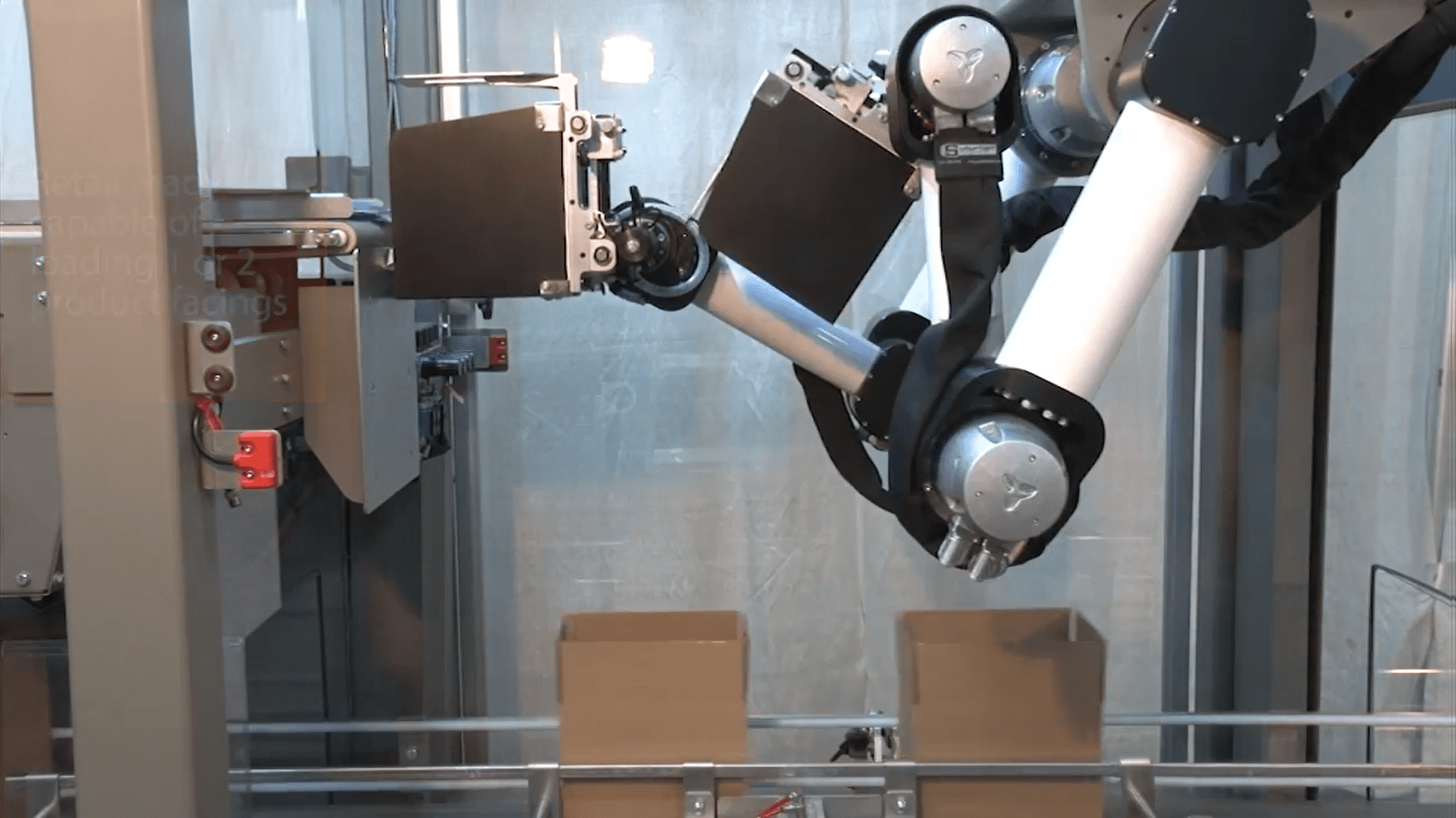
Robots Simplify Automation — and Human Interaction
Robots often improve ergonomics not because they “automate more,” but because they simplify how automation is achieved.
Mechanism-Based Automation: Motion Through Hardware
Traditional automation handles motion through dedicated mechanical systems. As complexity increases, so does the hardware:
Each element becomes another potential drift point, jam point, or maintenance requirement.
Robotic Automation: Motion Through Programmable Movement
A robot can often replace multiple mechanical functions with:
This creates a powerful dynamic: More technology, fewer mechanisms.
And when mechanisms and touchpoints decrease, the reasons for unsafe operator interaction often decrease as well.
Why Simplified Automation Improves Operator Safety and Health
When robotics simplifies an automated system, three ergonomic improvements typically follow.
1. Fewer Interventions Mean Fewer High-Risk Moments
If jams, misfeeds, and adjustments occur less often, operators have fewer reasons to:
Safety improves primarily because exposure frequency drops.
2. Interaction Becomes More Controlled
Well-designed robotic cells often concentrate human interaction into safer areas:
Instead of improvising fixes inside the machine, operators interact with the system in standardized ways.
3. Less Repetitive Strain
Robots can remove many physically demanding tasks, such as:
This matters because ergonomic injuries often result from cumulative strain over months or years, not just single incidents.
Where Robots Deliver the Biggest Ergonomic Benefits
Robotics tends to improve operator safety and health most when it replaces tasks that are:
Tasks performed dozens or hundreds of times per shift create major exposure, even if each action seems small.
Examples include:
These tasks are often prime candidates for robotic replacement.
When product variability forces constant adjustments in mechanism-heavy systems, robots can absorb variation through motion planning, sensing, or vision.
The largest ergonomic improvements often occur where robots replace:
When Robots Don’t Improve Ergonomics
Robots do not automatically improve safety or health. Poor system design can eliminate many of the expected benefits.
Common failure patterns include:
If robots are layered onto a mechanism-heavy architecture instead of replacing it, the system may gain complexity without reducing touchpoints.
Under-designed sensing or vision systems can create frequent faults, increasing stress and rushed recovery.
If operators cannot safely recover basic faults, downtime increases and shortcuts often return.
Key Question
When something goes wrong, does the system make the safe action the easiest action?
How Buyers Should Evaluate Robotics as an Ergonomic Solution
If your goal is improving operator safety and health, the evaluation should start with operator interaction.
To go beyond the simple “robots vs no robots” mentality, consider asking these questions:
Conclusion: Robots Improve Ergonomics by Simplifying Automation
Many ergonomic problems on packaging lines aren’t caused by a lack of automation. They come from mechanism-heavy automation that creates constant micro-interventions such as jams, adjustments, threading, resets, and difficult access points.
Robots help when they act as a simplification tool, replacing stacks of mechanisms with flexible motion. When that happens, the system often gains:
Robots aren’t the only way to improve ergonomics, but in many packaging environments, they’re one of the most effective. This is because simplifying the automation architecture often reduces the human exposure created by complex mechanical systems.
Looking for a collaborative partnership?
Give us a call. With over 60 years of industry experience, Douglas consultants can help you evaluate automation options and find a solution that builds operational confidence.