Introduction
When a company invests in secondary packaging equipment—case packers, shrink wrappers, cartoners, or palletizers—the expectation is clear: reliable performance and consistent production output.
But many manufacturers discover something unexpected after installation.
Why does a brand-new packaging machine still struggle to hit OEE targets? Why do changeovers take longer than expected? Why do the same small faults keep interrupting production?
In many plants, the issue isn’t the machine. It’s training.
In many plants, the issue isn’t the machine. It’s training.
Even the most advanced packaging equipment cannot perform at its full potential if operators, maintenance teams, and engineers don’t fully understand how to run, maintain, and troubleshoot it.
At Douglas, we’ve worked with manufacturers across food, beverage, and consumer goods packaging to implement and support secondary packaging systems. One pattern appears consistently:
Plants with structured, role-specific equipment training consistently outperform those that rely only on basic startup instruction.
So what does best-in-class training for secondary packaging equipment actually look like?
In this article, we’ll break down the five elements that separate basic machine instruction from performance-driven training programs, and how to evaluate whether your equipment partner is providing the level of training your operation needs.
What Is Best-in-Class Training for Secondary Packaging Equipment?
Best-in-class training for secondary packaging equipment is a structured, role-specific program that teaches operators, maintenance teams, and engineers how to safely operate, troubleshoot, and optimize packaging machinery.
Unlike basic startup instruction, best-in-class training includes hands-on machine experience, advanced diagnostics, and ongoing lifecycle support to improve operational metrics like OEE, changeover time, and equipment reliability.
Why Training Drives Packaging Equipment Performance
In many facilities, equipment training is treated as a startup checkbox: a few days of instruction during commissioning, a binder of documentation, and then the team moves on.
But small inefficiencies compound quickly in the following ways:
In plants with minimal training, equipment performance slowly drifts—even when the machine itself is capable of much more.
Best-in-class manufacturers treat training as a performance strategy, not just a commissioning task.
The Five Elements of Best-in-Class Training for Secondary Packaging Equipment
1. Tiered, Role-Specific Training
Rather than one-size-fits-all, effective training is layered. Different roles require different levels of knowledge and responsibility.
Best-in-class programs typically include:
Operators should be able to independently complete changeovers. Maintenance teams should confidently diagnose mechanical or servo-related issues. Engineers should understand the system architecture.
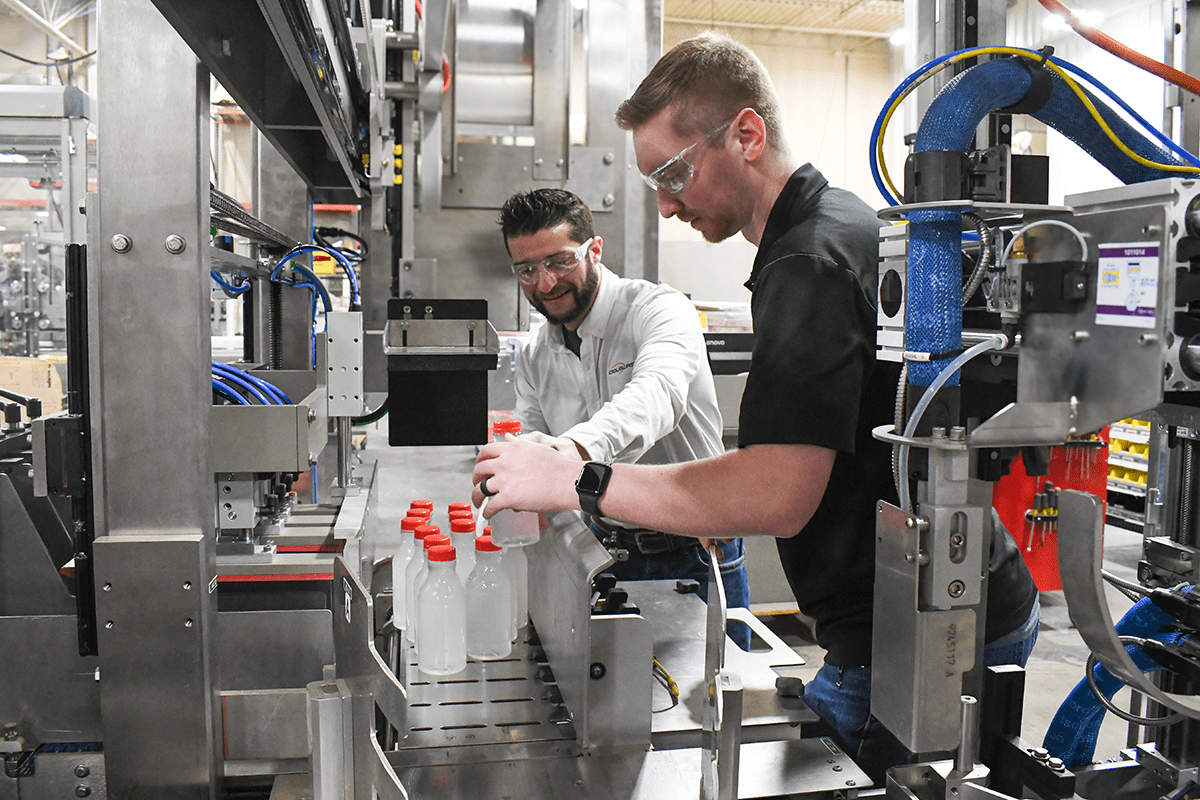
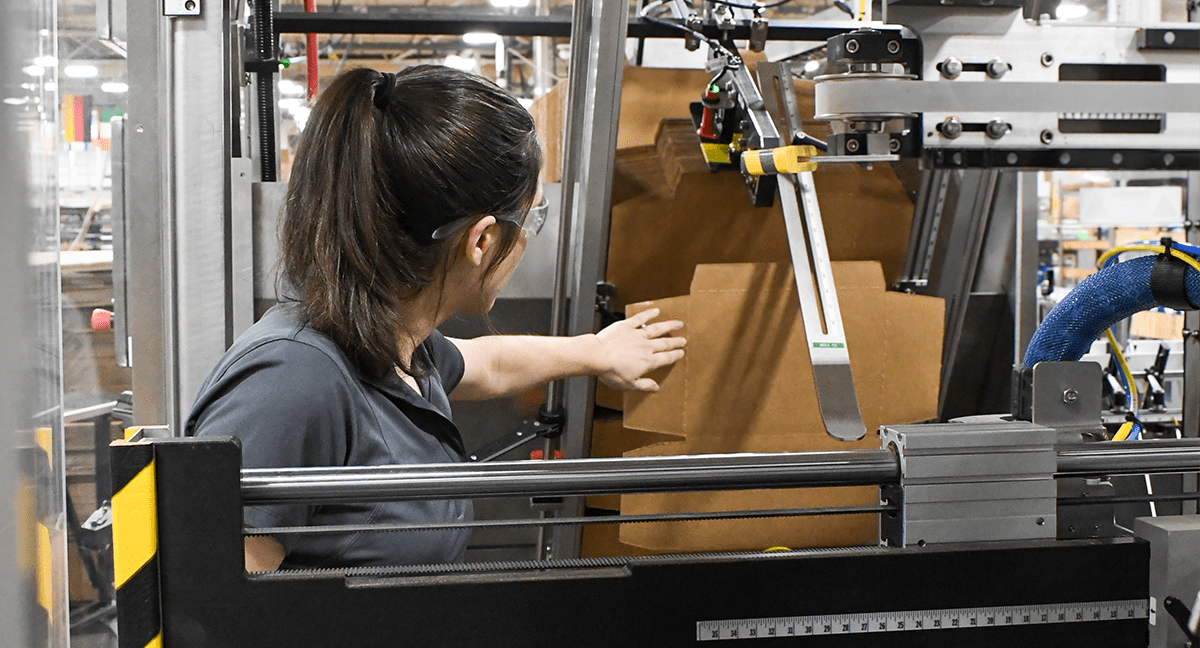
2. Hands-On Training on the Actual Packaging Equipment
If training happens entirely in a conference room, it isn’t enough.
The most effective programs combine:
The objective isn’t simply familiarity with the equipment. The objective is operational capability. Training should steadily reduce reliance on OEM service support as plant teams gain confidence and experience.
3. Training Depth Aligned to Operational Responsibility
Operators, maintenance teams, engineers, and plant leadership all require different levels of technical depth. A best-in-class training program reflects those differences.
Operators focus on:
- Safe machine operation
- Changeover procedures
- Minor adjustments and basic troubleshooting
Maintenance teams focus on:
- Preventive maintenance
- Timing and mechanical adjustments
- Diagnostic procedures
Engineers focus on:
- Controls architecture
- System optimization
- Advanced troubleshooting
Leadership focuses on:
- OEE drivers
- Lifecycle strategy
- Equipment modernization planning
4. Training Integrated With Long-Term Equipment Support
Training should not end once the machine is commissioned. Instead, as equipment evolves, training should evolve with it.
Best-in-class programs integrate training with:
When machines evolve but training does not, performance gaps inevitably appear.
5. Training Measured by Operational Performance
Training success should be tied to real operational metrics (not satisfaction surveys).
The most effective programs drive measurable improvements, such as:
How to Evaluate a Secondary Packaging Equipment Training Program
If you are evaluating packaging equipment suppliers or assessing your current training program, consider asking these key questions:
- Is training specific to the equipment being installed?
- Is the program tailored to operators, maintenance teams, and engineers?
- Does training include hands-on troubleshooting and changeover practice?
- Are digital documentation and training resources available after startup?
- Is the training program connected to performance improvements like OEE and changeover time?
If the answer to most of these questions is no, the training program likely falls short of best-in-class and won’t fully support your packaging performance.
What Poor Packaging Equipment Training Really Costs
Underdeveloped training programs typically show several warning signs, such as:
The result is predictable: Plants become dependent on service calls, shift performance varies widely, and equipment efficiency slowly declines over time.
The Bottom Line: Equipment Performance Depends on the People Running It
Many packaging performance problems aren’t caused by machine limitations.
They’re caused by knowledge gaps.
When operators lack confidence in changeovers, when maintenance teams rely on service calls for routine diagnostics, or when engineers don’t fully understand controls architecture, even the best equipment will underperform.
Best-in-class manufacturers understand this and treat equipment training as part of their performance strategy, not just a commissioning step.
When training is structured, hands-on, role-specific, and tied to measurable outcomes, the results are clear: faster changeovers, fewer faults, higher OEE, and more confident production teams.