Introduction
At a Glance
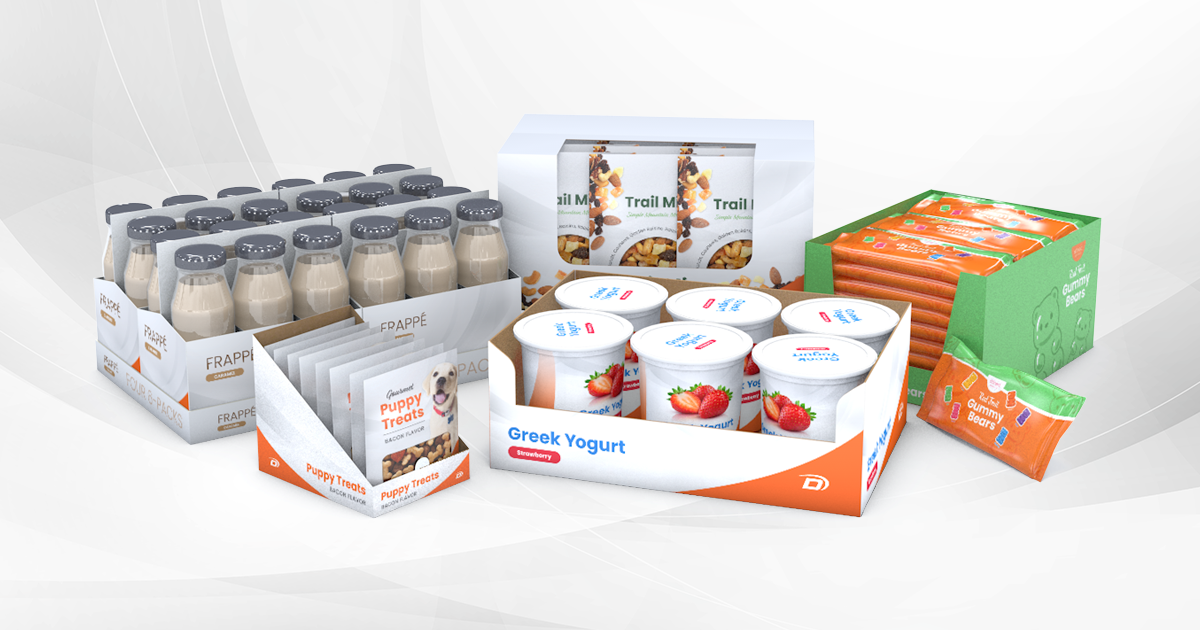
Retail-ready packaging (RRP), or sometimes called shelf-ready or display-ready packaging, is an increasingly popular, secondary packaging choice. It’s designed not only for cases to protect product through distribution, but also to promote and identify the brand, and provide ease to the retailer and consumer.
RRP requirements are often understood under the title, “The Five Easies”:
- Easy to Identify
- Easy to Open
- Easy to Replenish
- Easy to Shop
- Easy to Dispose
For your line, RRP means tighter tolerances and stricter controls for case features and printing. It’s important to know when RRP is required for your product channels, and when it’s not. RRP is primarily a retailer-prompted design choice, and money can be saved when it’s not needed.
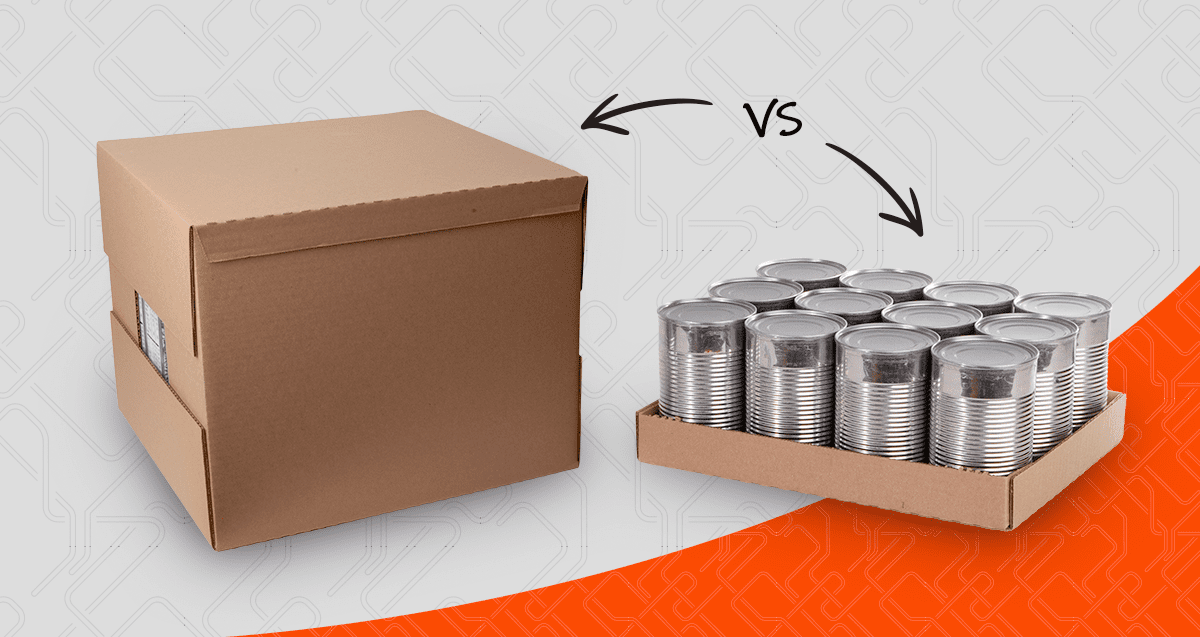
In secondary packaging, a plain corrugated case has one job: get product through distribution safely. Retail-ready packaging (RRP) – the plain case’s more decorative cousin – is asked the same, but with the added caveat that it also looks nice and offers ease to the retailer and consumer. Now, the case is not only protective, but also offers presentation to attract and sell to consumers.
RRP has typically been an operational choice, but major retailers are increasingly mandating it. For many brands, it’s becoming a necessary line and packaging choice. It’s not just a design feature, it’s a requirement for getting product on the shelf.
In this article, we’ll cover:
- “The Five Easies” retailers ask for
- What constraints RRP puts on your line
- Common RRP failures and their fixes
- When RRP isn’t worth it for your line
The RRP Framework Retailers Ask For
RRP is commonly evaluated by how well it serves “The Five Easies” framework. The idea is that RRP should satisfy each requirement with ease, in simple succession, at all times. These demands are what make RRP a difficult need to meet.
The 5 Easies:
These constraints are straightforward, but difficulty comes with the realization that these features must coexist with the packaging’s original job. That is, protecting the product through all distribution channels.
A pack that opens easily, but crushes in transit fails. A pack that protects perfectly, but is wholly human-proof fails too. Any unexpected effort expended in relation to your pack reflects your brand as a whole.
RRP’s Presence on Your Line
In your line, the demands of RRP and The Five Easies will show up as tighter tolerances and stricter controls. Here are some specific ways RRP constrains your packaging floor:
- Registration and Tear Features
The opening feature on your pack only works if it’s placed accurately, relative to the brand printing and case geometry. That’s registration control your line must hold consistently, not just on the first case. - Print and Structure Together
Print quality and placement are paramount, because RRP is brand-facing. Print must align with structural features like forming, gluing, and sealing. It must be repeatable so that the graphics, perforation, and fold all land correctly, every time. - Protection That Still Allows Easy Access
The pack needs to be equipped for stacking and transit, and then provide easy opening seconds later. The balance of strength and accessibility is a real constraint, which is why RRP cases are less forgiving of material and forming variations. - Changeover Flexibility
RRP tends to multiply SKUs and formats. Your line needs to be able to change over between retail-ready configurations cleanly. And tooling and recipe demands rise with every display format you run.
Common RRP Failure Modes and Fixes
There are situations where RRP goes wrong. Usually they’re common faults, and they point to a specific control failure:
When RRP Isn’t Worth It
RRP is often a retailer-driven requirement – it’s value is entirely dependent on the channel. If your product moves through channels that don’t ask for retail-ready presentation, you’ll likely save a lot of time and effort by staying with the plain cases and distribution requirements.
Buying RRP specs when it’s not needed will add registration, tooling, and changeover complexity that are unnecessary to the success of your product. A standard corrugated case protects better, runs simpler, and costs less.
RRP earns its place when it’s mandated by a retailer, or when shelf presence sells product reliably. The best practice is to only add retail-ready complexity when the distribution channel demands it.
Build for the Channels Your Product Meets
The hidden complexity in retail-ready packaging is that it asks for two jobs done within one pack format:
- Protect in transit
- Present on shelf
Consider the demands of your channels before you tie your product to one format and machine. Design the opening feature, registration, changeover, and anything else The Five Easies are asking of you, at the start. And if your channel doesn’t demand retail-ready format, consider keeping the plain case. Either way, your decision should consider retail first, and adjust to meet the proper expectations.
Need Help Choosing a Pack Format?
Schedule a discovery call. Douglas specialists can ask questions about your product and your market and guide you to the best solutions.