Introduction
At a Glance
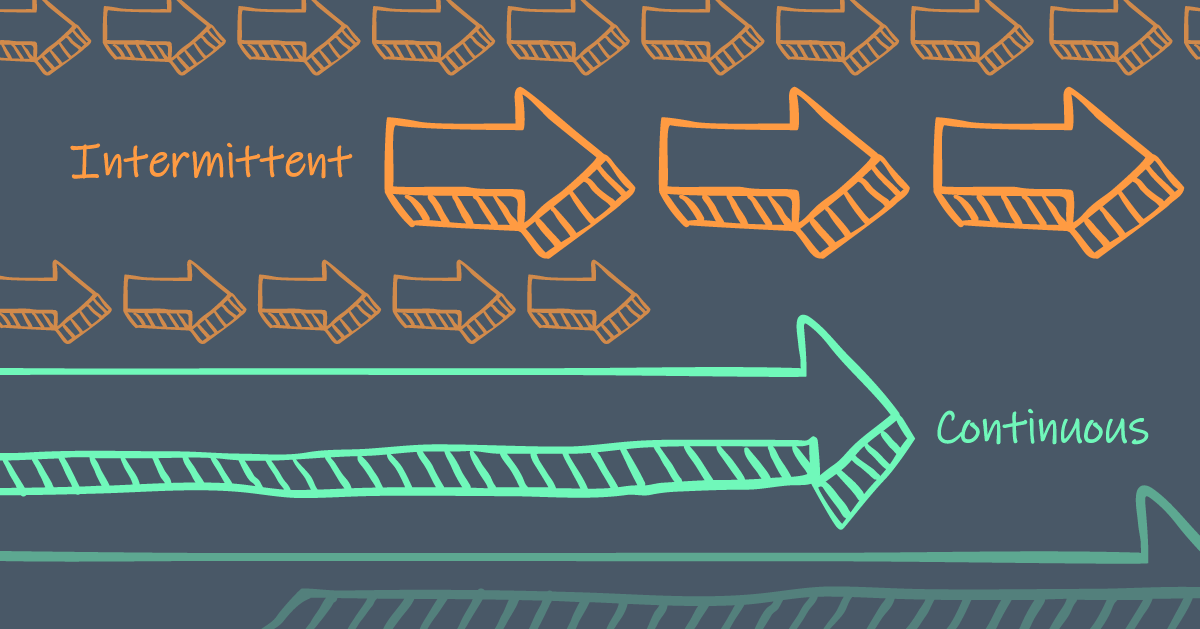
Intermittent vs continuous motion – what’s the difference? Packaging machines move in one of two ways – intermittently or continuously. Here’s how these types of motion differ:
- Intermittent-Motion (Indexing) – the machine stops the product, performs the operation while stationary, and then advances the product on to the next station. These machines are generally less expensive, simpler, and more flexible.
- Continuous-Motion – the machine performs operations in coordination with continually-moving product, by moving tooling along the line. These machines are generally more expensive, but have greater speed capabilities, smoother functionality, and gentler handling.
Neither type of motion is universally better, and product type and speed needs generally determine what machine to buy. However, either architecture has its own pros and cons. It’s important that operations understand the particulars of their machine.
When buyers look at packaging equipment quotes, they tend to focus on things like speed, changeover rates, and power – all valuable specs – but something they tend to undervalue is the machine’s motion.
How the machine moves makes a lot of difference for operations with fragile product, high-SKU mixes, or staff with limited capabilities. It’s key that operations can identify whether they need intermittent or continuous motion for their line, and what pros and cons are associated with each.
In this article, we’ll cover:
- How “motion” affects a packaging line
- The operational specifics of intermittent vs. continuous motion
- When products or lines determine what type of motion is needed
- What factors make the “motion” decision
What Does “Motion” Mean for a Packaging Machine?
A packaging machine’s “motion” is how product moves through the machine’s operations. This means loading, forming, sealing, etc. There are two main types of motion in packaging equipment: intermittent (indexing) and continuous. The difference between these architectures cascades into speed, product handling, complexity, and cost.
Architecture
Best fit
Main trade-off
Intermittent-motion
Autopopulated Value (Mobile Only)
Low–moderate speed, high mix, lower budget
Autopopulated Value (Mobile Only)
Speed ceiling; start-stop handling
Continuous-motion
Autopopulated Value (Mobile Only)
Sustained high speed, fragile/consistent handling
Autopopulated Value (Mobile Only)
Higher cost, complexity, infeed sensitivity
Intermittent-Motion (Indexing) Machines
Intermittent-motion (or “indexing”) machines move product into stations, where they perform operations while stationary. They then advance the product and welcome the next batch. Since all operations happen at a standstill, the mechanisms can be simpler, and the timing tends to be more forgiving.
Intermittent-motion machines generally excel at:
Because of these factors, intermittent-motion machines are strong fits for low-moderate speed operations and high-mix lines.
The big tradeoff is that stopping and starting takes time. With each cycle, the machine takes additional time to reach speed and slow to a stop. This caps throughput possibilities and creates risk for delicate or liquid-filled products.
Continuous-Motion Machines
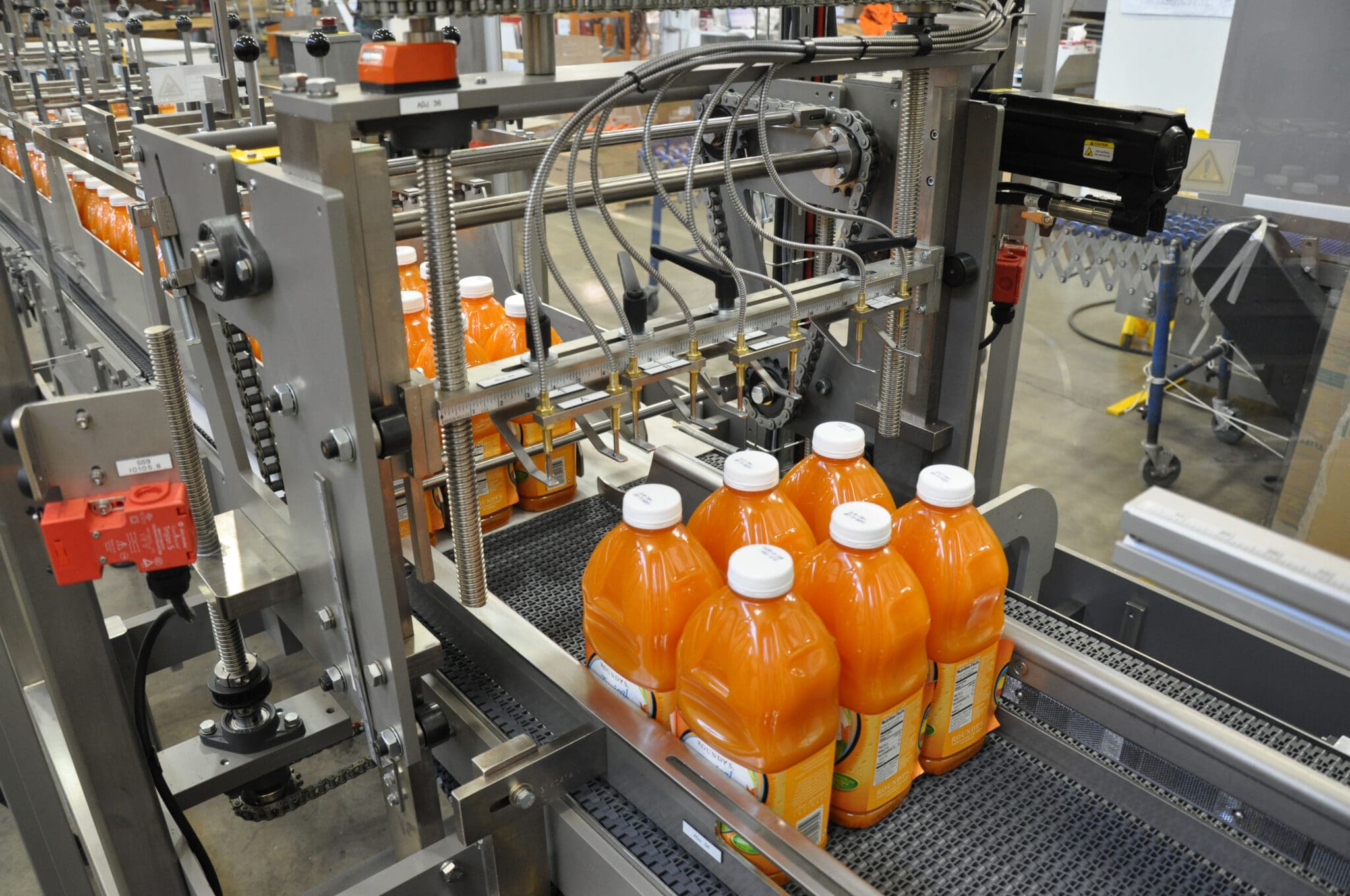
Continuous-motion machines never stop product. The machine’s operational tooling travels at the same rate as the product, and work is done in coordinated motion.
Continuous-motion machines generally excel at:
These factors make continuous-motion machines ideal for high-speed operations, or for operations which handle fragile or liquid products. However, continuous motion demands tight timing, sophisticated control, and a steady stream of products.
Speed capabilities are wasted if the machine has to wait for product. It’s as if you paid a worker to wait around. Continuous-motion machines generally also have higher capital costs and may require more in-depth changeovers.
What Type of Motion Do I Need?
While it can be tempting to see the benefits of one type of motion over the other, the choice of “what’s right,” is likely dependent on your specific line. There are four factors that make up the decision:
- Required Speed
Moderate rates favor intermittent motion; while sustained, high rates, favor continuous motion. - Product and Format
Robust and forgiving products tolerate the stopping and starting of intermittent motion. Fragile, liquid, or precisely handled products demand the smoothness of continuous motion. - SKU-Mix and Changeover
Mixes that are highly varied may favor the simpler changeovers that intermittent machines offer; while stable, high-volume mixes reward continuous throughput. - Capital and Maintenance
Intermittent machines are generally lower cost upfront and simpler to support. Continuous machines usually cost more and have greater demands for control and infeed discipline.
Continuous-motion is technically a higher-performance architecture, so it often gets specified when manufacturers are working with vendors. However, intermittent-motion machines are often the better buy when the operation fits. Know your line, know your machine, and the decision may make itself.
How Clear Decisions Change Things
The difference between intermittent motion and continuous motion can be summarized like this:
Moderate speed, durable product, high-mix
↓
Intermittent-Motion
High speed, fragile product, stable-mix
↓
Continuous-Motion
The decision usually makes itself. The important thing becomes identifying what your product needs, and what pros and cons will come when the machine ends up on your floor. Once you can identify the machine you need, you can spend the rest of your time looking at the full depth that your quote offers.
Not Sure Which Motion is Right for You?
Schedule a discovery call. Douglas specialists can answer questions and help guide you to the best solutions for your speed, product, formats, and budget.