Introduction
At a Glance
Paperboard overwrappers are hard to budget for, because they’re often highly customized solutions. They range from around $350,000 to over $2 million, and there aren’t really clear tiers to budget with. However, the cost drivers of overwrappers are somewhat clear:
- Sleeve design
- Containment needs and product profile
- Orientation needs
- Single- vs. Double-tier capability
- Pack pattern and size range flexibility
These factors are the main areas that will cause price increases, and therefore, they’re the main areas that you can manipulate to keep price low. Know your line, your team, your product, and your priorities, and then you’ll be primed for effective budgeting and vendor conversations.
Overwrappers are a unique sort of secondary packaging equipment. They provide a distinct result, and require a distinct, custom machine to match. They tend to be some of the most custom solutions in secondary packaging equipment. So, they can be costly, and they’re usually hard to budget for.
However, overwrapper projects can start off right with proper preparation. The better you know your line, your team, your products, and your priorities, the better primed you’ll be for budgeting and vendor conversations. Once you have the foundation, all you need for a budget is some pricing estimates.
In this article, we’ll cover:
- Budgetary estimates for different tiers of overwrappers
- Sleeve designs and how they’re applied
- Overwrapper cost drivers and add-ons
- Factors that overwrapper buyers should be aware of
What Is an Overwrapper?
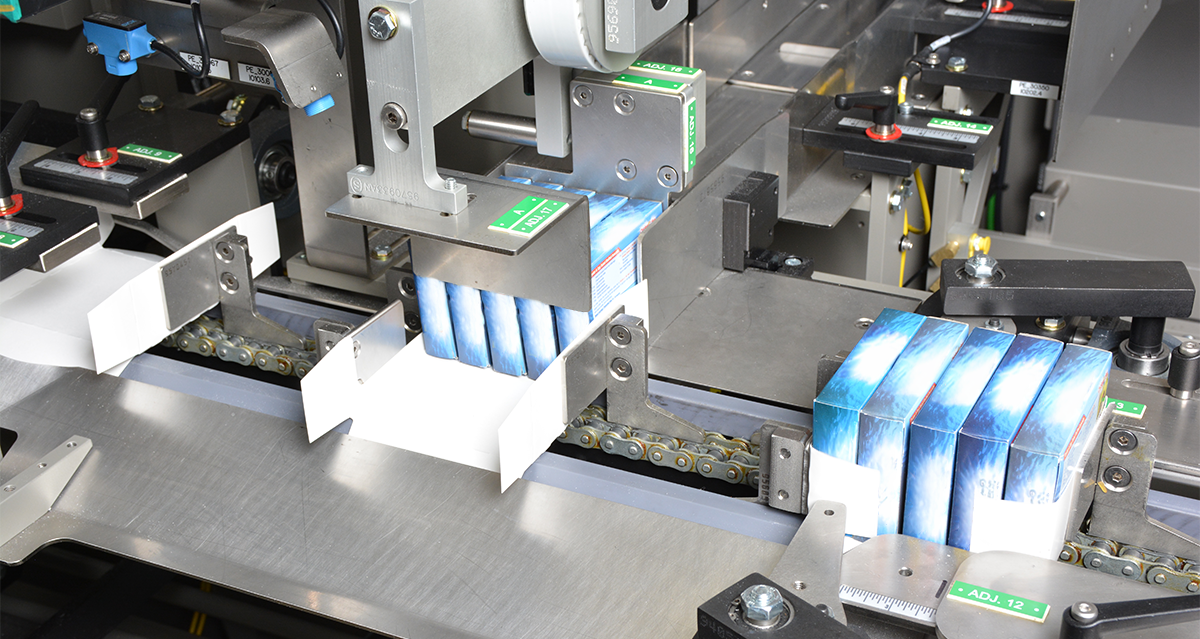
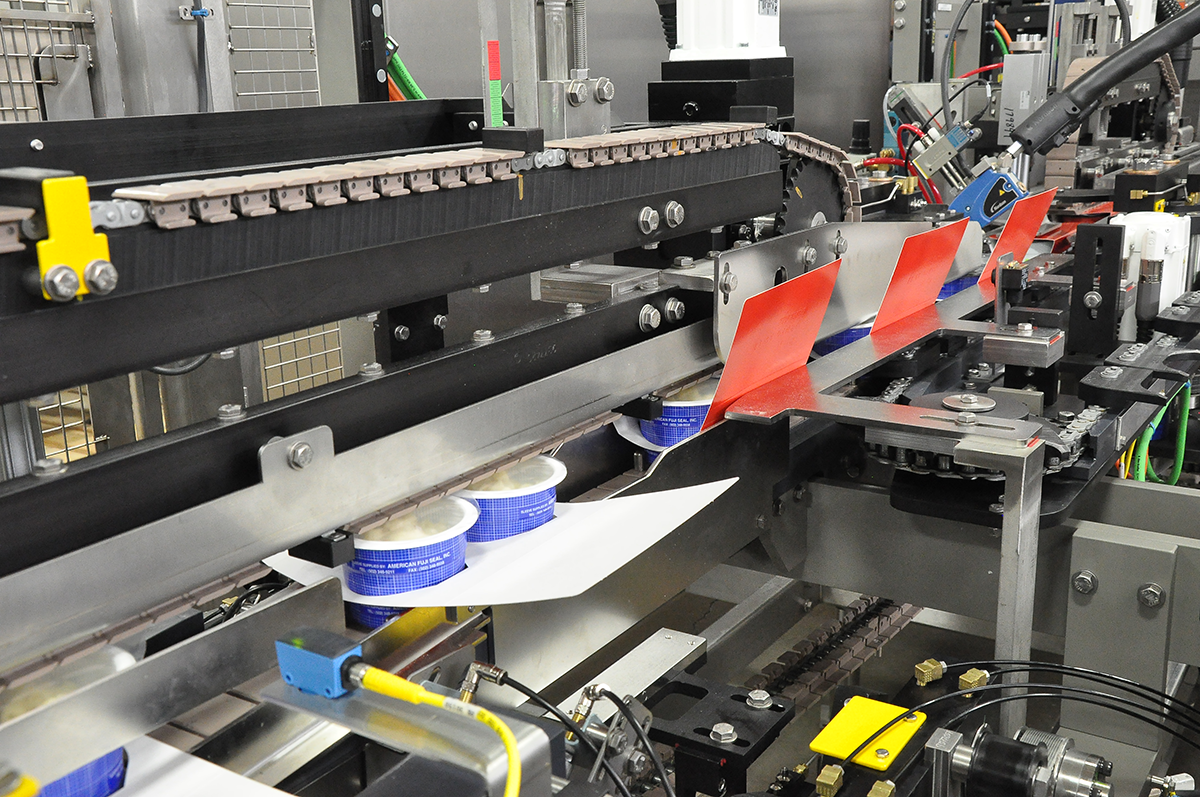
An overwrapper is a secondary packaging machine that wraps sleeves over products for protection and containment during shipping, storing, and selling. There are many kinds of overwrappers and sleevers, but this article will focus specifically on overwrappers which wrap or sleeve product with paperboard.
Paperboard sleeves are made from pre-shaped flat board (typically with scoring). They’re often left open on the sides and then sealed. Regardless of format, their purpose is to fold around products, bundling and providing containment, shape, and protection.
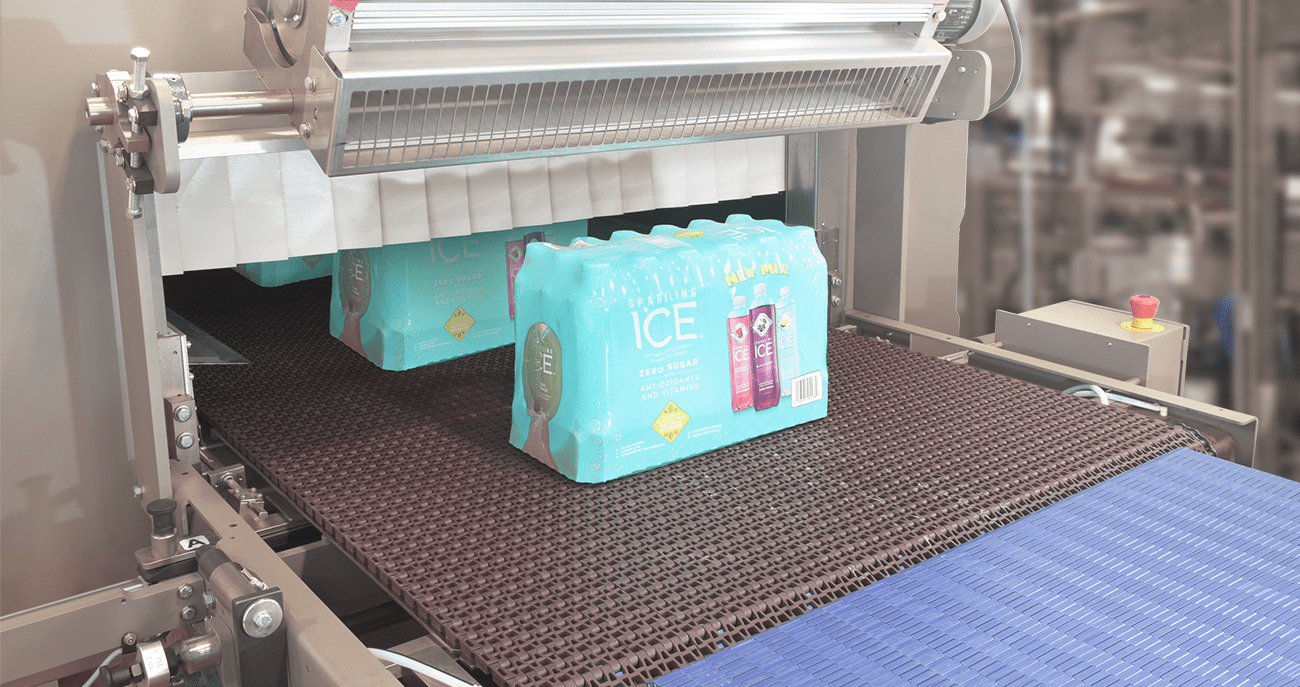
These paperboard sleeves are most commonly seen on products like yogurt and fruit cups or bottles, like protein shakes and juices. Generally, they are used to bundle single-serve products together, and they are primarily seen in the consumer packaged goods (CPG) industry.

What Overwrapper Application Does Douglas Offer?
The overwrapper at Douglas is our Apex™ solution. Within our company, we refer to overwrappers as “sleevers,” so don’t get mistaken by the site header. For the purposes of this article, we’ve used the term “overwrapper” to avoid any cross-market confusion.
Common Sleeve Designs
Even within the paperboard sleeve segment of the overwrapper industry, there’s a lot of variation. One way sleeves vary is through their sleeve design, which dictates the format and final appearance of the sleeved product. But sleeve design also impacts the level of containment, the application and sealing methods, and the overall machine cost.
Here are the most common designs:
- Wraparound – The sleeve is placed either over or under the product, wrapped around it, and sealed. It is the most standard method of sleeving and standardly comes in top- or bottom-seal varieties.
- Drop-Through – The product is dropped into pre-cut holes and secured by the wider upper rim or lip of the container. This method is a variation of a top-sealed wrap and is commonly used for tapered or flared containers.
- Neck-Through – The sleeve is placed over the product and wrapped around, and the neck of the product fits through pre-cut holes. Like a combination of the other two methods, side walls contain the product, and pre-cut holes fit to the bottle’s neck. This method is a variation of a bottom-sealed wrap, and it provides more product containment than a standard wraparound.
How Much Does an Overwrapper Cost?
Contrary to other forms of secondary packaging automation, overwrappers don’t fall into clear categories of price and function. They range due to their natural need for customization. The price is dictated by the product that is being sleeved, the format of sleeve design, and the level of containment.
Being aware of this, take our price tiers with a grain of salt. They are general estimations from our experience, rather than clear industry standards.
Baseline
Baseline overwrappers function with more standard, rudimentary motion. This tier will primarily include slower-speed systems designed to process product in cups (e.g. yogurt, fruit cups, applesauce, etc.). Timing and spacing will be metered by wheels, screws, timing belts, or many other methods at slower speeds, but the machine will still likely be continuous motion (CM) overall.
Note: Since overwrapper machines tend to be quite custom, they’re usually seen in CM, but some vendors do offer intermittent applications. Capabilities on intermittent overwrappers will likely be even more basic – designed mainly for lines just starting out in automation.
These systems will likely only be able to handle wraparound applications, in either top- or bottom-seal varieties.
- Cost: ~$350,000
- Speed: Up to 100 – 150 sleeves per minute
Mid-Range
There really isn’t a “mid-range” in overwrapping automation. Systems that would fall in this tier tend to be made on an application-to-application basis.
- Cost: ~$350,000 – $750,000
- Speed: Up to 300 sleeves per minute
High-Range
Once you get into high-range overwrappers, prices vary widely. Metering is primarily done through screws, and functions are orbital rather than linear. Beyond these motion aspects, the defining features are all in the customizations.
Different flap folding methods, sealing methods, and sleeve designs will become options. Drop-through and neck-through designs will be more common, as well as more complex design varieties. These could be upper or lower gussets on wraparound designs, or 2/2 side sealing on drop-through designs.
The biggest sleeve design factor with these high-range systems is the ability to do top, bottom, and side seal for different formats.
- Cost: ~$900,000 – over $2 million (for highly custom and elaborate solutions)
- Speed: Up to 300 sleeves per minute
Sleever Price Range Comparison Chart
Price Tier
Sleeve Design
Cost
Speed
Baseline
Autopopulated Value (Mobile Only)
Wraparound only, with top or bottom seal
Autopopulated Value (Mobile Only)
~$350,000
Autopopulated Value (Mobile Only)
Up to 100 – 150 sleeves per minute
Mid-Range
Autopopulated Value (Mobile Only)
Wraparound with top or bottom seal, drop-through, or neck-through
Autopopulated Value (Mobile Only)
~$350,000 – $750,000
Autopopulated Value (Mobile Only)
Up to 300 sleeves per minute
High-Range
Autopopulated Value (Mobile Only)
Same as mid-range, but with the addition of flap folding options and side sealing
Autopopulated Value (Mobile Only)
~$900,000 – $2 million
Autopopulated Value (Mobile Only)
Up to 300 sleeves per minute
What Drives the Cost of an Overwrapper?
Overwrappers are regularly customized. And their price drivers reflect that. The more you want your system to be capable of, the more the price will increase. However, if you keep your functions standard, you may be able to keep the price low.
Sleeve design is one of the biggest cost drivers. Wraparound with top or bottom seal is pretty standard, but once you get into drop-through, neck-through, folding, sealing, or end-wall customizations, the price begins to increase.
In some cases, design can be limited to keep costs low. Other times, design is dictated by marketing efforts or product requirements. Know where your SKUs fall, and plan ahead accordingly.
Containment is ultimately the purpose of sleeving, and so it makes sense that it’s one of the greatest drivers of system price.
Like sleeve design, the more complex containment becomes, the more the price increases. If the ends of the sleeve are open vs. closed, if product has to fit through pre-cut holes, then there will be a corresponding price jump.
In general, the more difficult the product is to contain in its packaging, the more your machine will need to compensate. Sometimes the machine needs to hold the product steady from beginning to end, avoiding slipping or tipping, and that’s an additional cost.
If the product is an unusual shape, you will also see price increases. The less standard the product, the more the machine needs to be customized to fit.
Orientation comes in for multiple reasons (e.g. printing, upstream conditioning, etc.), but a common one is basic infeed orientating. If your product isn’t ready to be sleeved, then the machine needs to orientate it, which adds functions and cost.
Another relatively common orientation request is when dual-tiered product is flipped, top to top. This is often seen with fruit cups, where the top layer is flipped upside down, relative to the bottom layer. That can be a big cost adder.
Sleeved products are often packed in a dual-tier format. Adding another tier changes the machine functions in multiple steps of the process. So, there’s a price jump when moving from single to double tier capabilities.
Since overwrappers are usually built pretty custom to the product they’re sleeving, they’re limited in their size range flexibility. If you’re looking to add capabilities for multiple pack patterns or products of different shapes and sizes, there will be costs incurred.
The greater the range of sizes and product diameters, the more metering wheels and screw change parts that are needed. Beyond metering and packaging, SKU-range also impacts split-pitch capabilities.
Common Adders and Customizations
Beyond the base needs of customization and function, many lines choose to add on to their system to further increase capability and productivity. Here are some common choices, and how they impact system cost:
Choose to automate some of the changeover points on your overwrapper. At those points, the system will auto set to recipe-programmed adjustments, aiding with overall changeover efficiency
-
$
Cost: Varies depending on application
Using additional cameras and sensors, have your overwrapper help reject product that doesn’t meet quality standards. With this add-on, lines often include interlocks, which adds another cost
-
$
Cost: ~$30,000 – $150,000
Add this feature to the end of your overwrapper to have finished product split into multiple lanes. This can help by preparing products for downstream efforts (e.g. palletizing: requires certain pack patterns)
-
$
Cost: ~$150,000 – $210,000
Add this feature to prep your infeed for the overwrapper by having it sort product into metered groups. It can also orientate your product, limiting overwrapper-led orientations
-
$
Cost: ~$10,000 – $150,000 (depending on depth)
If your facility has strict cleaning requirements, or handles sticky or corrosive product, talk to your vendor about a washdown package. It can adjust materials and design to avoid build-up and facilitate cleaning
-
$
Cost: ~$40,000 – $250,000
What Should Overwrapper Buyers Be Aware Of?
Here is a list of factors that won’t necessarily drive machine costs, but which will be important to have ready as vendors put together your specific design:
- Paperboard weight
- Amount of flap overlap
- Potential SKU-range
- Printing and orientation concerns
- Desired finished-package quality
- Sleeve overhang on sides of product
These factors can affect some functionality of the machine – for example, printing may necessitate certain orientations. But overall, many of these factors are just important to consider, to have a consistent view of what your team is valuing and looking for.
Your Next Step: Understand Your Priorities
If you’re considering the purchase of an overwrapper, the best step you can take is to know your line, your team, your product, and your priorities. The better you know what you’re valuing, the better your budgeting will be. You’ll also see smoother vendor conversations, a smoother commissioning process, and likely, a happier return.
What’s important to realize about overwrapper projects is that they’re some of the most custom projects in all secondary packaging automation. This article can’t provide a quote or walk you through options. But it can give you an idea of what budget you should expect and help you decipher your priorities as you step into the buying process.
Looking to Start Your Overwrapper Project?
Schedule a discovery call with Douglas. Our team of specialists will answer questions, evaluate your line, and collaborate to create the sleever system that meets your priorities.