Introduction
How fast can someone be on-site when your machine is down?
It’s one of the most urgent and stressful questions you can ask—because downtime isn’t just inconvenient, it’s expensive.
After handling hundreds of emergency and planned service calls across multiple machine platforms, we’ve seen firsthand what actually causes delays and also what consistently speeds service up.
So what’s really causing delays, and what can you do to avoid them?
The answer depends on the issue itself, the technician skill set required, and how ready you are to schedule.
In this article, you’ll get realistic timelines for emergency and planned service, plus practical steps that can reduce delays by days. We’ll also explain how our team at Douglas handles field service requests—so you know exactly what to expect and how to get help faster when it matters most.
Typical Service Wait Times: Emergency vs. Planned Work
If you’re down, the goal is days—not weeks. But specifics matter.
Here’s what our field service leaders typically see, and these ranges are consistent with what’s common across most OEM field service organizations:
These timelines aren’t about urgency alone—they’re about matching the right resources to the situation.
Four Key Factors That Impact How Fast You Get Help
There’s no one-size-fits-all answer, and we’ve found that these four variables most affect response time:
1. How clearly the problem is defined
A mechanical failure, electrical fault, or recipe/setup issue may require very different expertise. The clearer the diagnosis and symptoms, the faster the right technician can be assigned.
2. What platform the machine is on
Most OEMs organize technicians by equipment family or platform. While strong generalists can help in a pinch, the best outcomes usually come from matching the right technician to the right machine.
3. Whether scheduling authorization is already approved
In many OEM systems, a PO—or written confirmation that one is in process—is required before travel can be booked. This prevents last-minute cancellations that can strand technicians or delay other customers.
4. How flexible your downtime window is
Limited availability (for example, nights only or a narrow two-day window) often causes more delays than technician availability itself.
Emergency vs. Planned Work: How OEMs Prioritize Field Service
Most service organizations split work into two lanes:
1. Emergency Triage
“We’re down—help us get running.”
2. Planned Execution
“We want the best fix, done right the first time.”
Every customer situation feels urgent, but true machine-down emergencies must be verified to keep response systems fair and effective for everyone.
In practice, only ~10-25% of service calls are true emergencies. The majority of support is planned and scheduled in advance.
What You Can Do to Get Faster Service (and Better Outcomes
The more complete this information is, the faster a technician can be scheduled.
Use this checklist to reduce the time between “we need help” and “boots on the floor”:
Before you call:
During scheduling:
Result:
Faster diagnosis, better technician matching, and fewer wasted trips.
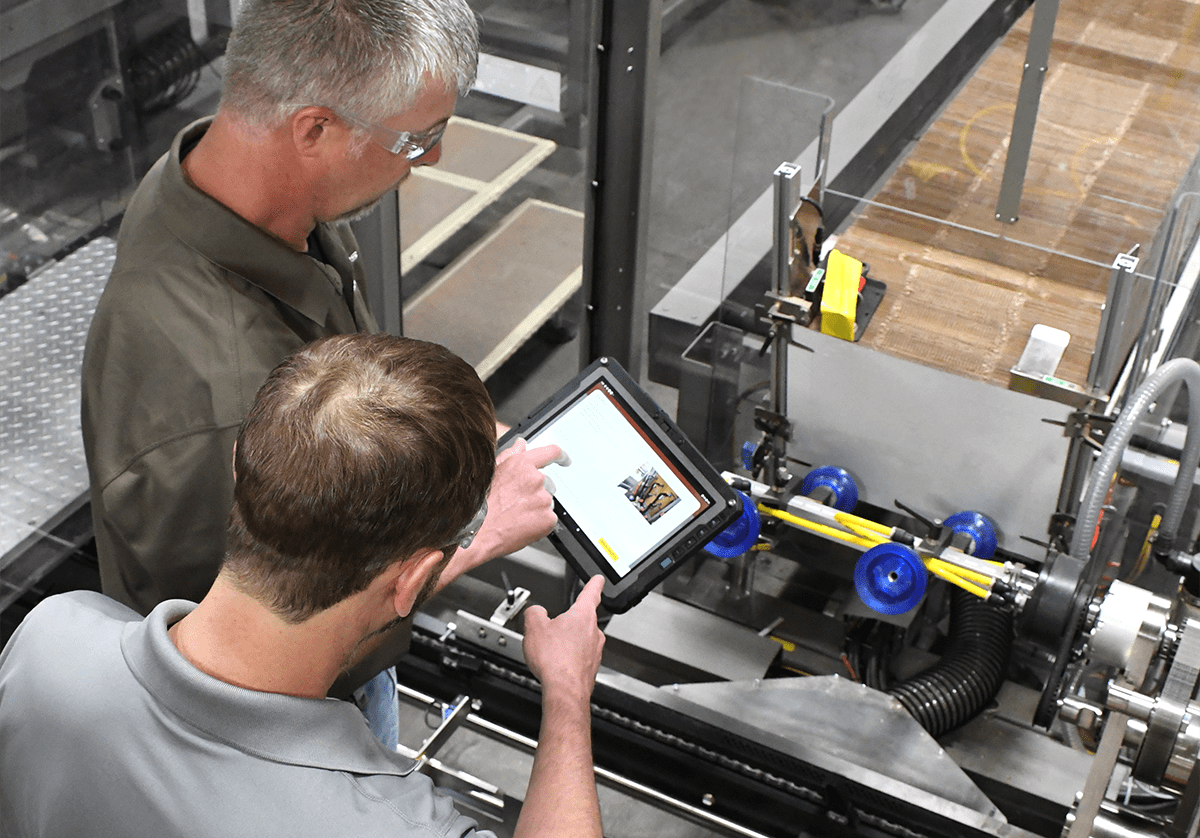
Speed vs. “Right Tech, Right Fix”: What’s the Tradeoff?
A faster response may mean a junior technician supported remotely.
The best first-time fix may require waiting for a specialist.
A quality service organization should explain that tradeoff clearly—so you can choose what’s right for your production line and your business, instead of guessing under pressure.
Planning Tip: Add Buffer Time for Rebuilds and Modifications
When planning rebuilds or field modifications on older equipment, avoid scheduling right up to your restart deadline.
Common Mistake
Most delayed restarts we see come from rebuilds planned with zero buffer.
Once a machine is opened, hidden wear and secondary issues often surface. Without buffer time, that can mean delayed restarts or costly return trips.
Best Practice
Add 2-3 extra days of buffer.
You’ll either:
Service Communication Script You Can Use Internally
When a machine goes down or service is being scheduled, one of the hardest challenges isn’t contacting the OEM—it’s setting realistic expectations internally.
Plant manager, operations leaders, maintenance teams, and leadership often ask:
This script is designed to help you communicate service timelines clearly and confidently to internal stakeholders, using language that reflects how OEM field service actually works. It helps reduce confusion, prevent finger-pointing, and keep everyone aligned on next steps.
You can use this language in:
Field-Tested Internal Messaging
Using consistent language like this helps shift conversations from frustration to facts and makes it easier to explain why certain timelines are realistic rather than arbitrary.
How Douglas Responds to Field Service Requests
This section reflects how we operate at Douglas, so it’s naturally biased—but we believe transparency helps buyers make better decisions.
Here’s what we do differently:
1. Service advisors with project management mindset
Our advisors combine technical triage, customer communication, and coordination. Even if a technician can’t arrive immediately, we stay engaged to support remote troubleshooting.
2. Emergency standby coverage
We intentionally separate emergency capacity from planned work so true machine-down events aren’t delayed by routine audits or PMs.
3. Platform specialization with cross-training
Technicians are matched to platforms for precision, while cross-training reduces bottlenecks caused by relying on a single specialist.
4. Remote support options
Many controls, setup, and software issues can be resolved remotely—eliminating travel delays altogether. When on-site support is needed, we’ll also use trusted third-party technicians and communicate that clearly upfront.
5. Parts responsiveness
We work to avoid “technician waiting on parts.” Common components are stocked, and when custom items are required, we communicate lead times early and plan accordingly.
Conclusion: How Fast Can You Expect Field Service
If your machine is down, you can often get help within 1-5 days, but that speed depends on:
For planned service, 3-4 weeks is a realistic expectation, with longer lead times for complex or specialist-driven work.
At Douglas, we combine early triage, remote support, and platform expertise to help you get help faster—without sacrificing
If you’re planning service in the next 30-60 days or want help determining whether your issue is truly an emergency, reaching out early can prevent schedule surprises and unnecessary downtime.