Introduction
If you’re responsible for keeping a frozen pizza line running, you already know the challenge isn’t making pizza—it’s keeping up with demand and avoiding downtime.
Frozen pizza lines are notoriously demanding. High throughput. Wide SKU variety. Tight freezer environments. Retail-ready packaging expectations. And all of it needs to run reliably, day after day, without babysitting.
That’s why packaging automation decisions deserve extra scrutiny. The right system can stabilize your line and unlock growth. The wrong one becomes your biggest bottleneck.
Below, we’ll walk through the most important factors to consider when automating frozen pizza packaging—so you can make a confident, future-proof decision.
1. Start With Your Reality: Speed, SKUs, and Seasonality
Before you look at any machine, you need clarity on how your line actually runs today and how it needs to run in the future.
Ask yourself:
Frozen pizza producers often underestimate how much SKU variability impacts packaging performance. Automation that looks great at one fixed speed or format can quickly fall apart when variety increases.
WHAT TO LOOK FOR:
Packaging systems designed for high-speed and high-mix environments, with repeatable, quick and simple changeovers.
2. Design for Frozen Conditions—Not Just Food Packaging
Frozen environments expose weaknesses fast.
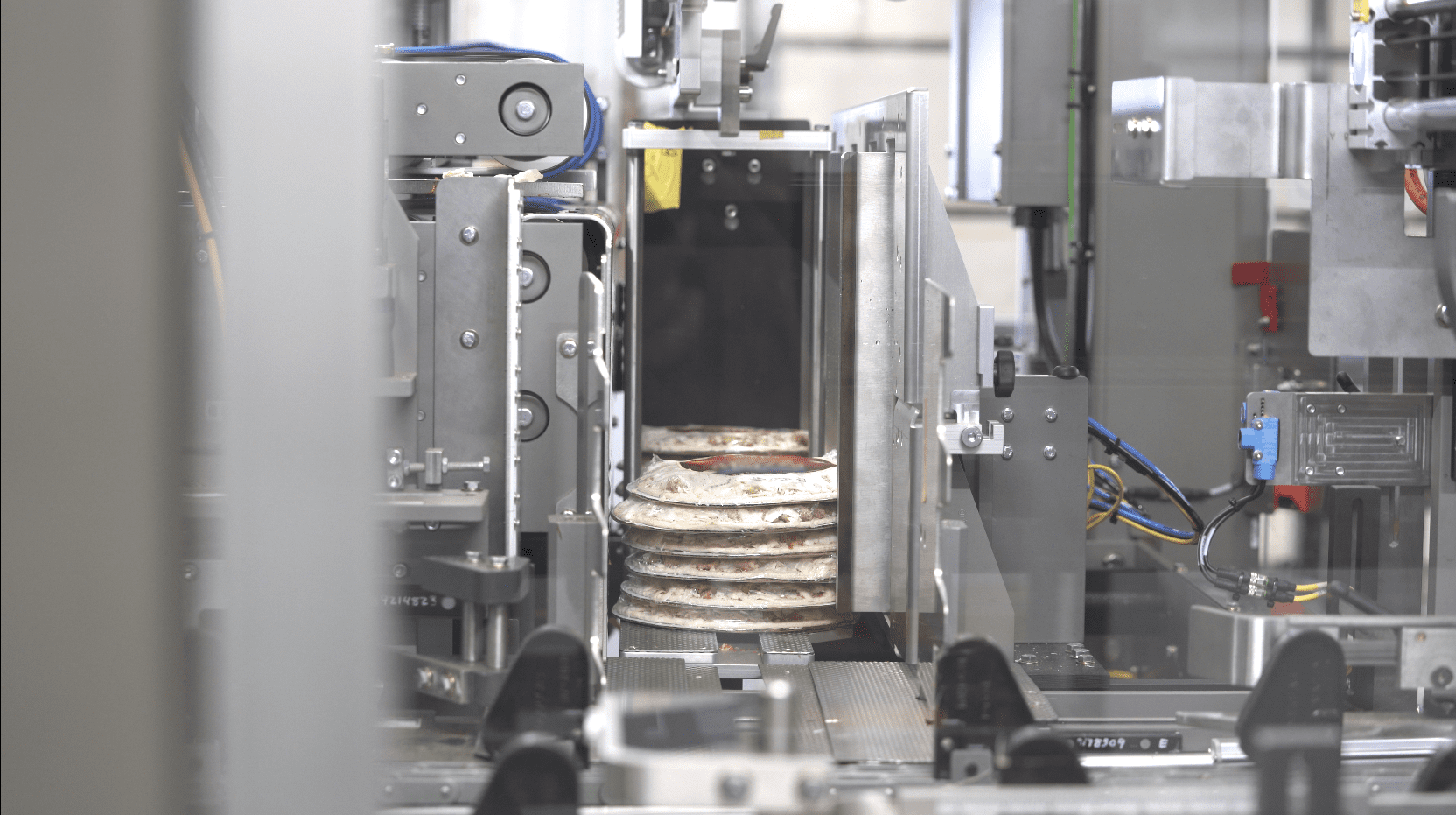
Cold temperatures, condensation, and frozen debris can wreak havoc on equipment that wasn’t designed for it. Bearings fail. Sensors misread. Operators struggle with adjustments.
When evaluating automation, pay close attention to:
bOTTOM lINE:
If a system works only in perfect conditions, it won’t survive long in frozen pizza production.
3. Match the Packaging Style to Your Production Goals
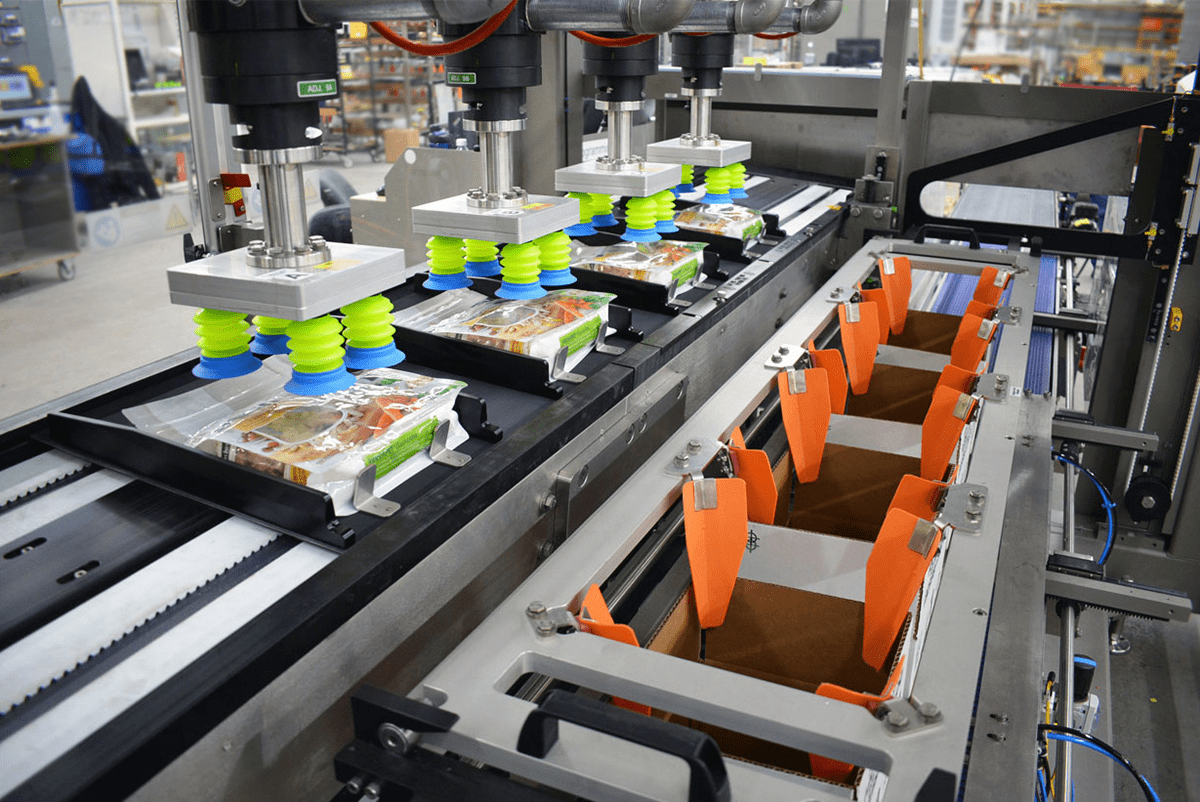
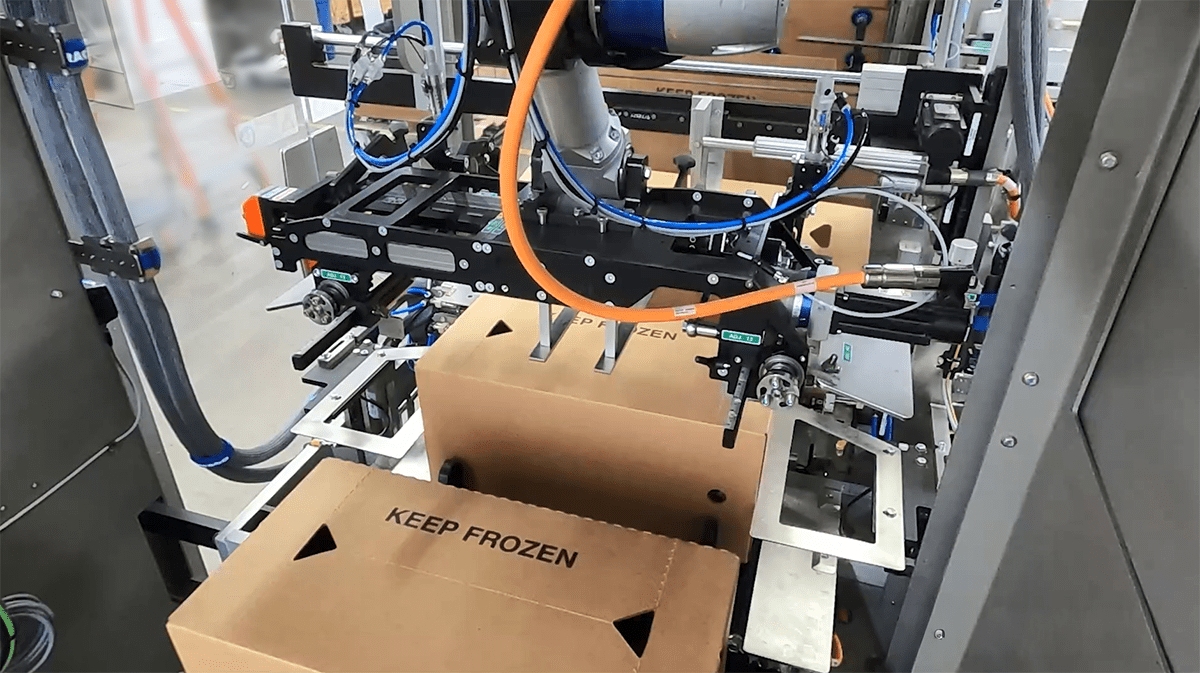
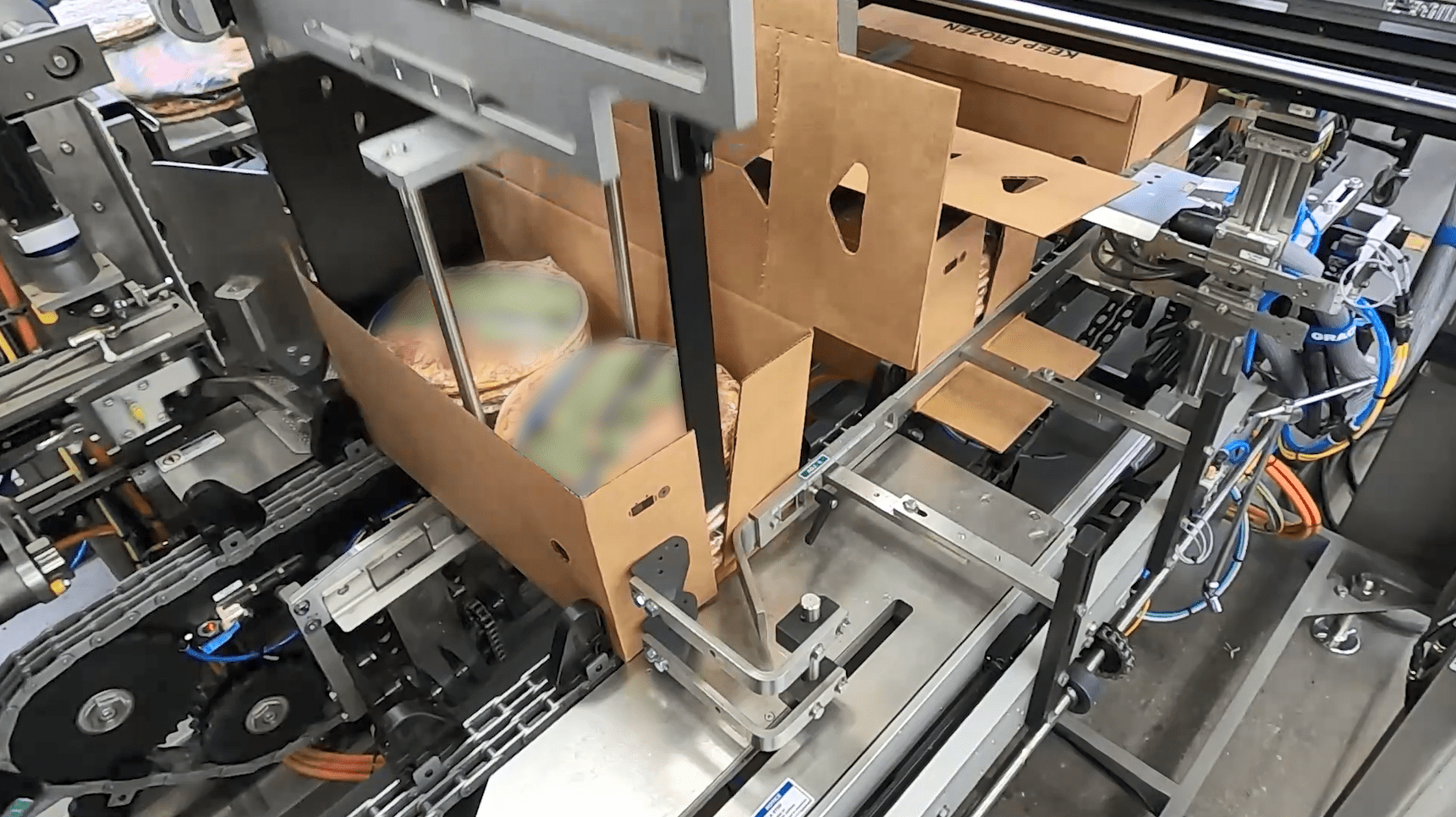
Frozen pizza packaging isn’t one-size-fits-all. Your secondary packaging choice should support both operational efficiency and downstream requirements.
Common formats include:
Each format impacts:
What Matters Most:
Choosing equipment that supports multiple pack styles without requiring entirely different machines, or scrutinizing each style for necessity.
4. Optimize the Hand-Offs, Not Just the Equipment
In frozen pizza packaging, most issues don’t come from a single machine failing. They come from poor handoffs between machines.
Product transfer, accumulation, and recovery logic often determine whether a line runs smoothly or constantly stops and starts. When each piece of equipment is optimized independently, those handoffs become fragile.
A well-designed packaging line treats every transition point as critical—not an afterthought.
The goal isn’t a great machine. It’s a fully integrated packaging line that runs seamlessly and predictably.
5. Prioritize Simplicity for Operators and Maintenance
Labor challenges hit frozen facilities especially hard. High turnover and variable skill levels mean your packaging automation must be intuitive.
Look for:
If your best operator is required to keep the line running, the system is too complex.
The Goal:
Packaging automation that runs consistently on every shift—not just the day shift.
6. Plan for Growth Without Rebuilding the Line
Frozen pizza brands evolve quickly—new sizes, new toppings, new channels, new retailers.
Your automation investment should support that growth without forcing you to rip and replace equipment.
Future-proofing questions to ask:
Equipment that only solves today’s problem often becomes tomorrow’s constraint.
7. Choose a Partner, Not Just a Machine Builder
Frozen pizza packaging automation is rarely plug-and-play at scale. Integration, layout optimization, and long-term support matter just as much as the machine itself.
The right partner will:
When your packaging line goes down, you don’t need finger-pointing—you need answers.
When Automation May Not Make Sense Yet
Packaging automation isn’t always the right first move, and being honest about that builds better outcomes long term.
You may want to pause or rethink automation if:
In these cases, targeted improvements—like manual assist stations, accumulation, or semi-automation—may deliver better ROI in the short term.
The goal isn’t automation for automation’s sake. It’s building a packaging operation that’s ready to scale when the time is right.
The Payoff: Faster Lines, Fewer Headaches, and Room to Grow
When frozen pizza packaging automation is done right, the results are tangible:
Most importantly, you gain confidence that your packaging line won’t be the reason you miss demand.
If you’re exploring automation for frozen pizza packaging, start with the right questions. The answers will point you toward a system that doesn’t just run fast—but runs reliably.