Introduction
Factory Acceptance Testing, or FAT, matters because it is the last meaningful opportunity to validate a machine before shipping turns every open issue into a more complicated problem.
But FAT is often discussed too broadly. Many articles explain what FAT is. Read on to learn What FAT should prove before your machine leaves the OEM?
That is the purpose of this article. It is a practical guide to the scope and limits of FAT so your team can use the event to reduce risk before installation, SAT, and startup.
What FAT Should Prove
A strong FAT should prove that the machine was built correctly, operates as intended, and is ready to advance to the next stage of the project.
In practical terms, FAT should verify the agreed machine functions, controls behavior, diagnostics, safety logic, mechanical operation, and the application-specific requirements that can reasonably be demonstrated at the OEM.
Just as important, FAT should create shared clarity. Your team should leave knowing what was validated, what still requires site-level verification, and what the next steps are once the machine arrives.
What FAT Should Not Be Expected to Prove
FAT is valuable precisely because it happens in a controlled environment. That same strength is also its limitation.
FAT usually cannot fully prove how the machine will behave with your exact utilities, your full upstream and downstream equipment, your plant conditions, your operators, or the variation that appears over longer production windows.
That is why FAT should not be treated as a substitute for onsite validation. It is pre-shipment proof, not final proof of real-world production readiness.
The Difference Between a Shallow FAT and a Meaningful One
A shallow FAT shows motion. A meaningful FAT shows evidence.
If the event is little more than a visual walkthrough or a short demo run, your team may leave with false confidence. A stronger FAT is built around agreed acceptance expectations, relevant test conditions, realistic materials (when possible), and enough rigor to expose issues while they are still easier to solve.
The earlier a gap is found, the less disruptive it usually is to correct. That is one of the biggest economic benefits of FAT.
What Your Team Should Be Asking During FAT
These questions help keep FAT focused on evidence rather than impressions.
Who Should Be Involved
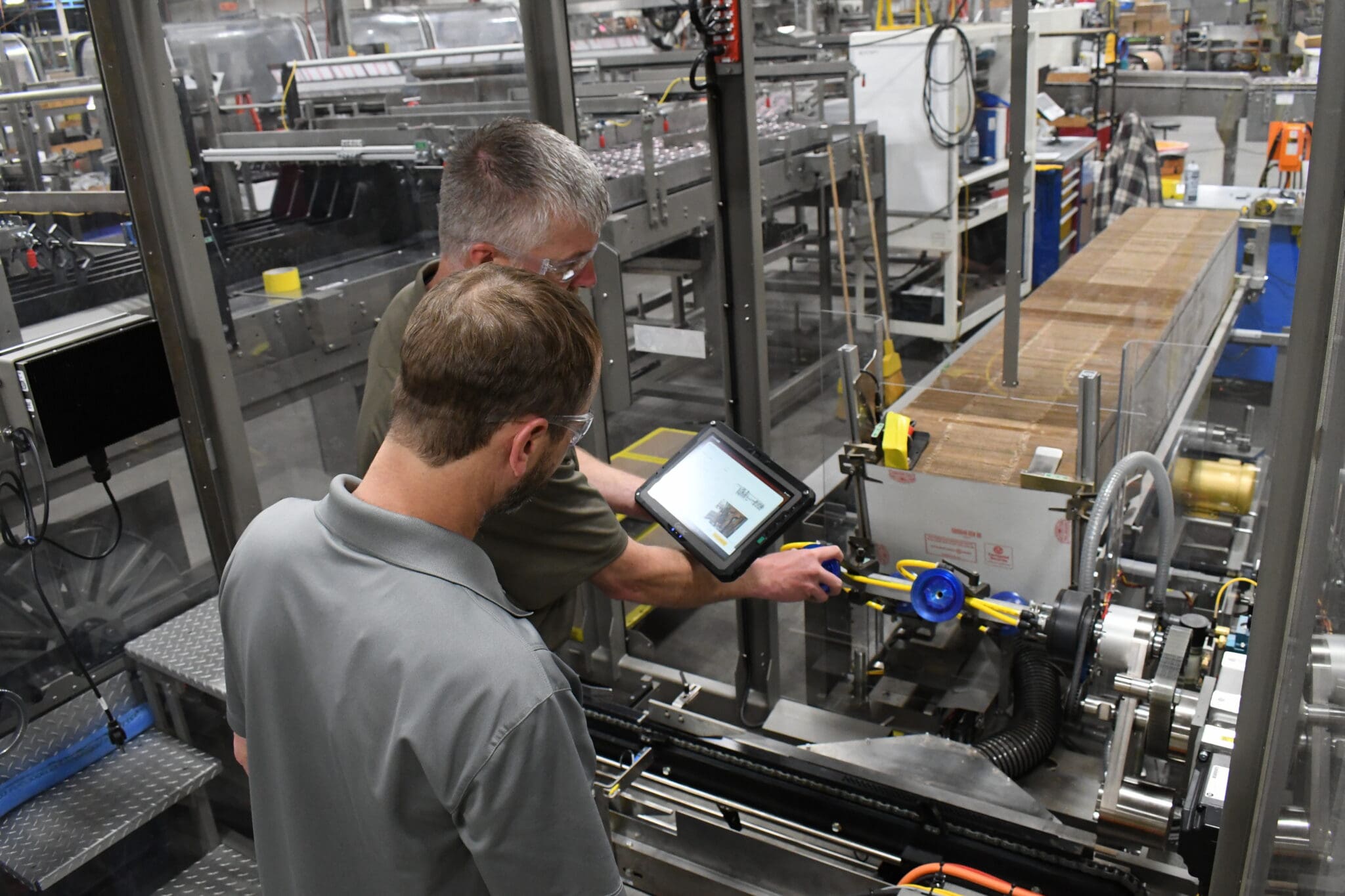
FAT is most useful when it includes people who will own the equipment after delivery. Depending on the project, that may include operations, maintenance, engineering, controls, and project leadership.
When those stakeholders are involved early, they can spot practical concerns, ask better questions, and prepare more effectively for installation and onsite acceptance.
Why the Service Team Still Matters at FAT
The quality of FAT is not only about the machine. It is also about the preparation behind the event and the support model around it.
A disciplined OEM should arrive at FAT with a well-prepared machine, clear testing structure, and the technical depth to explain what was proven, what was not, and what comes next. That is where service mindset begins to show up before the machine ever ships.
How to Make FAT More Useful
One of the best ways to improve FAT outcomes is to define expectations early. That includes the products or materials to be used, the required demonstrations, the acceptance criteria, and the people who need to attend.
The clearer those details are before the event, the more likely FAT will function as a true risk-reduction checkpoint instead of a ceremonial signoff.
Final Takeaway
FAT should do one job extremely well: Reduce uncertainty before shipment.
If your team uses FAT to define what has been proven, what has not been proven, and what still needs to be validated onsite, the event becomes far more valuable. It stops being a general demo and starts becoming a disciplined project checkpoint.
Have Questions About FATs?
At Douglas, we have a rigorous Factory Acceptance Test protocol. If you’d like to learn more, reach out and chat with one of our specialists.