Introduction
Why do machines struggle at first, run smoothly for years, and then start failing again?
If you’re responsible for CPG production equipment, you’ve likely seen this pattern firsthand: Machines feel unsteady right after startup, then run reliably for years—only to develop strange, unpredictable issues later.
You’re not imagining it.
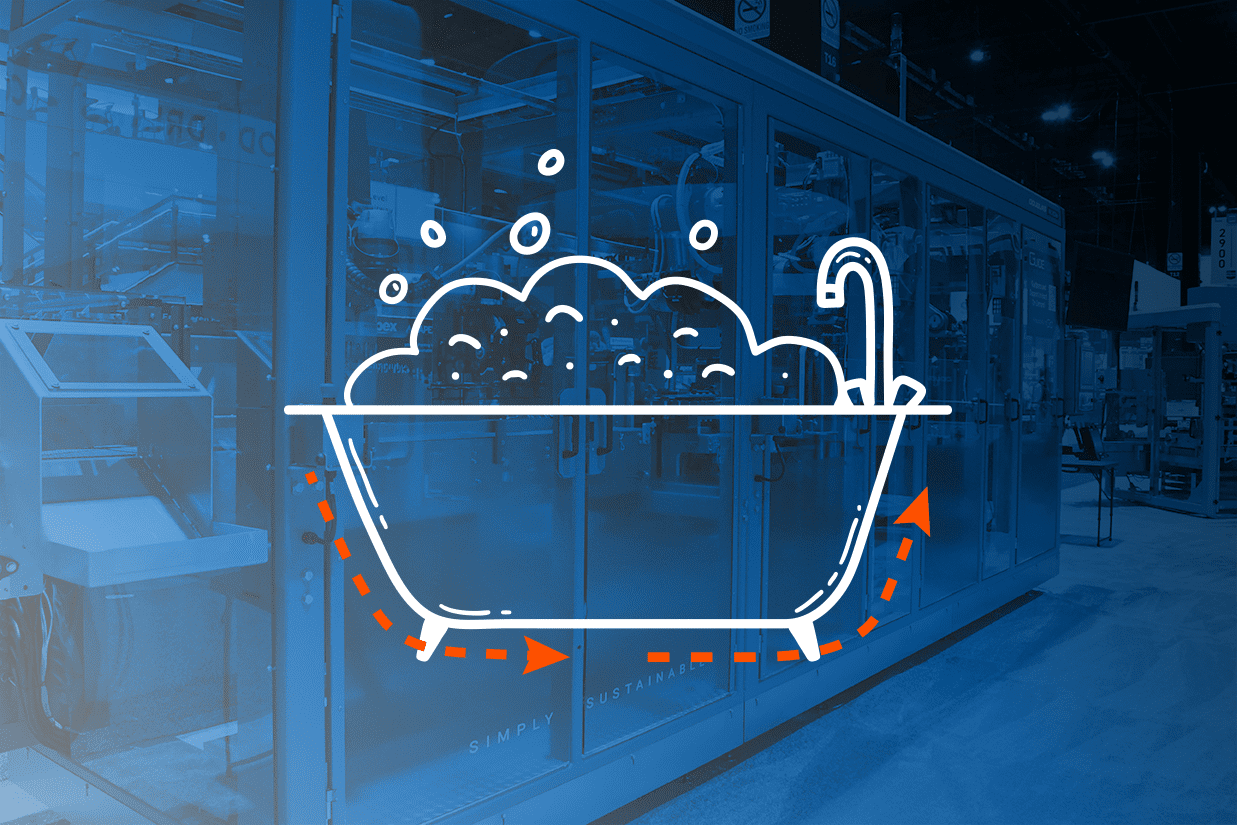
Across hundreds of production lines—during new installs, rebuilds, and lifecycle assessments—this pattern shows up again and again. It’s well documented in reliability engineering, and it’s known as the bathtub curve.
The bathtub curve explains:
- Why production issues spike right after installation or rebuild
- Why most machines settle into a long period of stable performance
- Why late-life failures seem to appear “out of nowhere”
Understanding this curve—and using it to guide your equipment lifecycle strategy—can dramatically increase uptime, extend asset life, and reduce unplanned downtime.
In this article, you’ll learn:
- What the bathtub curve tells us about equipment failure
- Why many machines age out faster than they should
- How top-performing plants extend the “useful life” phase and turn their “bathtub” into something closer to an Olympic-sized pool
What is the Bathtub Curve? (And Why It Matters for Reliability)
The bathtub curve visualizes how failure rates change over the life of a machine.
Initial Failures: Right after installation or rebuild, production issues are more common due to integration challenges, hidden defects, and the learning curve that comes with new equipment.
Useful Life: Once early issues are resolved, the machine enters a long, stable phase with low and predictable failure rates.
Wear-Out Phase: Over time, component wear and platform obsolescence cause failures to rise again—often less predictably and with higher operational risk.
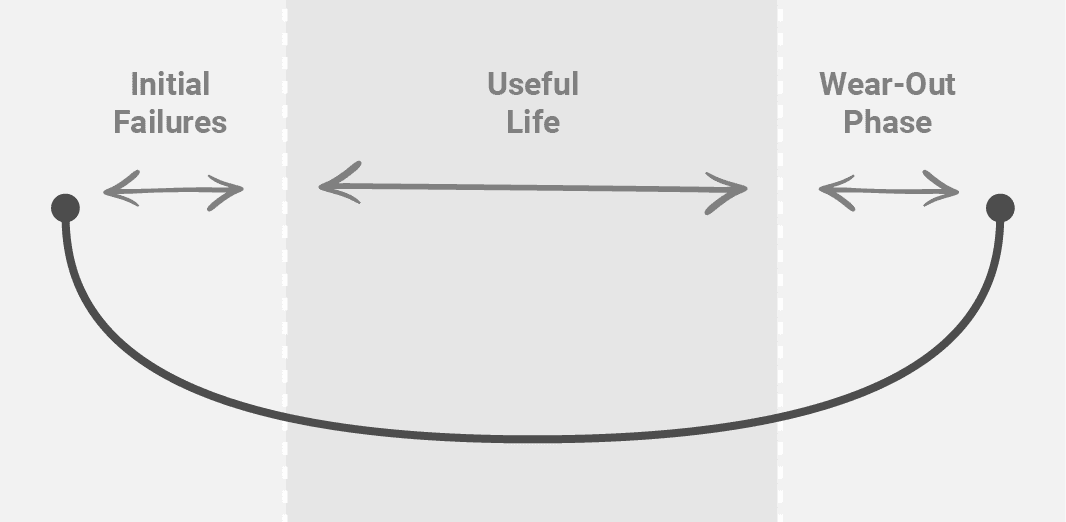
Plotted on a graph, the curve resembles a bathtub: High on the left, low and flat in the middle, and rising again on the right.
For operations teams, this explains why:
- New equipment can feel fragile
- Mature machines inspire confidence
- Aging lines develop “weird little issues” that drive surprise downtime
Here’s the opportunity: You can’t eliminate the bathtub curve—but you can dramatically extend the middle phase.
Phase 1: Initial Failures – Why New Machines Feel Unsteady (and How to Shorten This Phase)
Think of this phase less like a long adolescence and more like a toddler learning to walk. There may be a few stumbles at first, but with the right support, stability comes quickly.
What’s Really Happening
Early production issues almost always stem from:
Importantly, these are rarely design flaws. In most plants, they’re process gaps.
How High-Performing Plants Shorten This Phase
Plants that achieve long-term reliability intentionally invest in early success through:
We consistently see that plants treating startup as a reliability investment experience fewer problems—not just immediately, but years later.
The Hidden Cost of Rushing Startup
When this phase is rushed, bad habits get “baked in,” including:
These shortcuts often resurface much later, when downtime is far more expensive and recovery options are limited.
Phase 2: Useful Life – Where ROI is Won or Lost
This is the sweet spot: Low failure rates, predictable performance, and confident operations.
But this stability does not maintain itself.
What Shortens Useful Life Prematurely
Machines exit this phase early due to:
Left unchecked, these issues slowly push equipment toward the wear-out phase—often years earlier than expected.
What Extends the Useful Life Phase
Plants that maximize ROI consistently invest in:
This is where strong OEM partnerships shift from being a service convenience to a true asset management strategy.
Machines treated as long-term investments remain productive—and supportable—far longer than those treated as one-time projects.
Phase 3: Wear-Out: When Downtime Becomes a Strategic Risk
Eventually, physics wins. Components age. Controls platforms become obsolete. Supplier support disappears.
At this stage, failures are no longer random—they’re systemic.
Warning Signs You’ve Entered the Wear-Out Phase
The Critical Mindset Shift
The key question changes from “How do we fix this machine?” to “How much risk are we willing to carry with this asset?”
The most expensive modernization decisions are the ones made under duress. Planned controls upgrades or targeted mechanical refreshes are often far less costly—but only if action is taken before a catastrophic failure forces the decision.
This is where proactive lifecycle assessments and obsolescence reporting become critical—topics we’ll explore in an upcoming article.
How to Turn Your Bathtub into an Olympic-Sized Pool
You can’t eliminate the bathtub curve—but you can reshape it. Top-performing manufacturers do this by:
1. Designing for Lifecycle, Not Just Day-One Specs
Choose platforms with:
2. Treating Commissioning as a Reliability Investment
Your startup experience sets the ceiling for long-term performance.
3. Building Spare Parts Strategies Around Risk
Stocking decisions should be based on downtime impact—not just part cost.
4. Planning for Obsolescence Before It Becomes an Emergency
Controls upgrades and refresh projects are less disruptive—and far less expensive—when planned proactively through audits and lifecycle reviews.
5. Partnering with OEMs Who Think in Lifecycle Terms
The best OEMs don’t just sell machines. They help managed the entire installed base through:
Most plants agree with these principles. Execution breaks down when ownership, documentation discipline, and long-term planning aren’t clearly defined.
Why This Matters for Equipment Buyers
If you’re responsible for purchasing or maintaining equipment, the real question isn’t “How long will this machine last?” — It’s “How long will this machine remain productive, supported, and viable in our plant?”
That answer depends on:
- How commissioning is handled
- How service and support are structured
- How proactively lifecycle risk is identified and managed
It’s not just about equipment specifications. It’s about strategy.
Conclusion: Extend Equipment Life with a Lifecycle Strategy
If you’re experiencing aging systems, rising downtime, or spare parts chaos, you should now have a framework that is clear and actionable. However, if you’re unsure where your critical assets sit on the bathtub curve today, a lifecycle or obsolescence assessment is often the fastest way to reduce uncertainty and risk.
Every piece of equipment lives on the bathtub curve. How long your machines remain in the “useful life” zone is a management decision—not something you have to leave to chance.